
Adding an Elevator Air Conditioning System to an Existing Lift
author: Cloe
2026-11-03
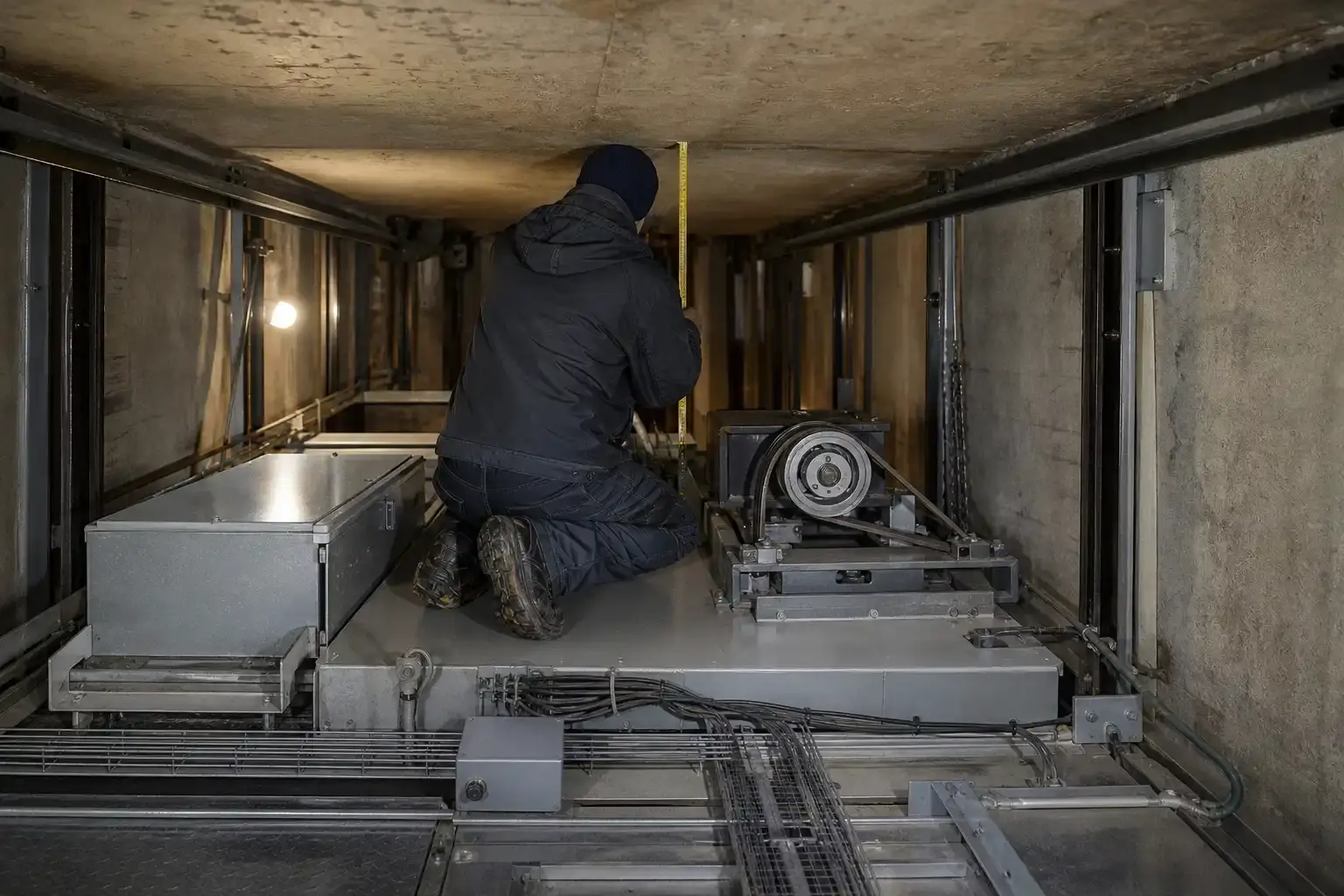
Most existing elevators can take an elevator air conditioning system. What decides it is not the age of the lift or its brand. It is five measurements, and any one of them can stop the job.
Check all five before you order anything. None of them can be answered from a catalogue. Every one is a measurement on your car top.
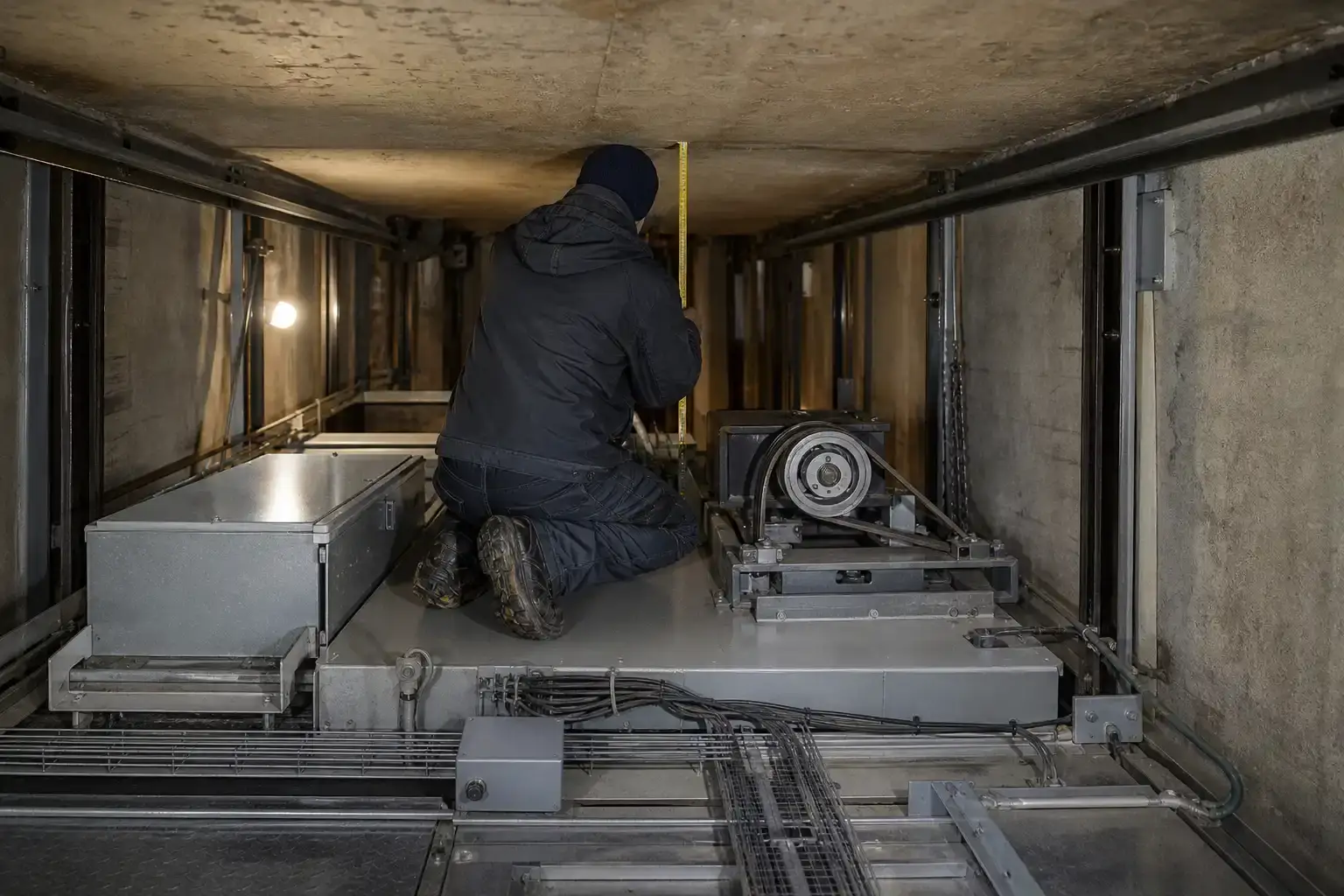
1. Headroom above the car
An elevator air conditioning system sits on the car roof, and the car roof already has a ceiling above it.
Measure the free height from the car roof to the overhead slab. Measure it at the point where the unit would sit. Then subtract the height of the unit and its mounting frame. What remains has to leave the refuge space your code requires for a technician standing on the car roof.
This is the check most often missed, and it is the one that ends projects. A car that is compliant today can become non-compliant the moment you bolt equipment and a frame to its roof. Measure at the landing where the car stops highest, not at the middle of the shaft.
2. Space on the car top
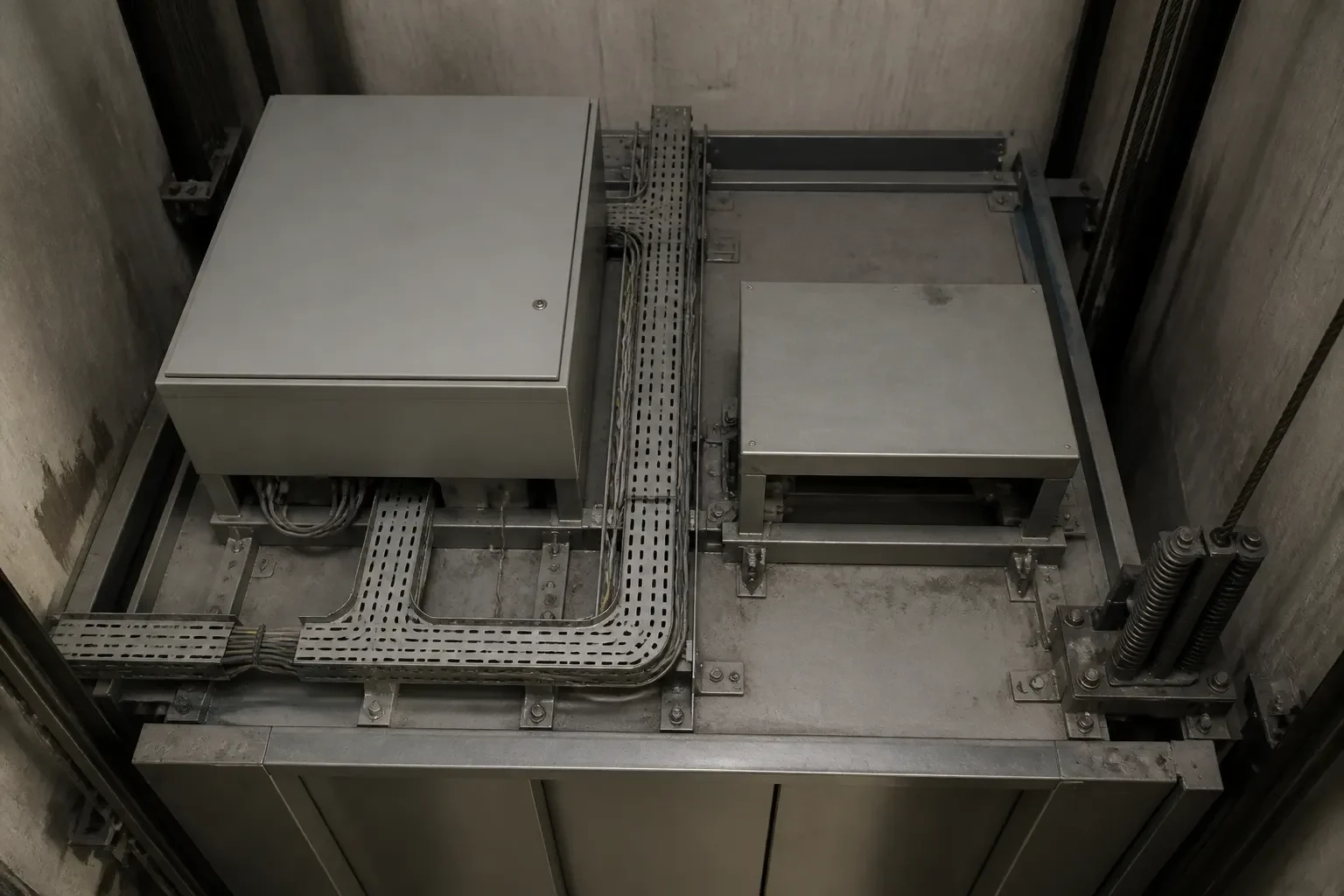
A car roof is not empty. The controller, the door operator, the safety gear and a run of wiring are already there. A car top air conditioner has to share that space.
Two things have to survive. The unit needs a footprint that does not sit on top of anything serviceable. And a technician still needs to reach that equipment afterwards.
If the unit covers the controller, you have traded a comfort problem for a maintenance problem. Cut the unit's outline out of cardboard and lay it on the roof before you order. Elevator air conditioner installation goes wrong on the car roof far more often than in the cabin.
3. Power that is already there
An elevator air conditioning system needs power in the car, which means power down the travelling cable.
Count the spare cores before you choose a unit. Many older installations have none left, and adding a cable is a different job at a different price.
Then confirm the supply. Single or three phase, and the rating the unit needs. Some car units ship with a breaker and a plug in the box. Confirm that for the model you are fitting rather than assuming it.
4. Somewhere for the water to go
An elevator air conditioning system makes water. On a lift, that water is the main technical risk, because there is nowhere obvious for it to go.
It must not drain into the shaft. It also must not spill onto the car top, where the controller and the wiring sit.
Three approaches exist, and they are not equal.
Basic evaporation. The fan throws condensate onto the hot condenser coil. It is cheap and simple, and it has no water level monitoring and no control over the rate. In a long humid season water arrives faster than it leaves. What follows is spillage onto the car roof, droplets inside the enclosure, corrosion and eventually electrical failure. It is also noisy, because the fan is chopping water.
Evaporation with a level sensor and a pump. A small tank, a level sensor, a condensate pump and often a sediment filter. Evaporation is controlled so it keeps pace with condensation, and the sensor shuts the unit down before the tank overflows. This is the design that survives a monsoon.
A drain line to a building drain. Only works where the shaft has somewhere to take it, which is rare on a retrofit.
Ask which one you are buying. "It evaporates the water" is not an answer. The question is what happens when it cannot keep up.
5. Weight and balance
The unit adds mass high on the car, and a traction lift is balanced against a counterweight.
Small units are usually within tolerance. Larger ones on a light car are not always. Check the rated load and the balance. Check the effect on the guide rails and the safety gear before you add anything to the roof.
This is also where noise comes from. An elevator car air conditioner bolted straight to the car top puts compressor vibration into the cabin. Isolator pads and a proper frame are part of the job, not an accessory.
The detail that decides whether the car feels cool
A car unit supplies air at around 14 to 15 °C.
If that air crosses metal on its way into the cabin, it condenses on the metal instead. Water then drips onto the car top or down the panels. Passengers feel a cold draft at the vent and a warm car everywhere else.
So the duct must deliver air straight into the cabin, and it must not run against metal on the way. This is the difference between a unit that works and a unit that runs all day and changes nothing.
When the answer is no
Do not buy in these cases.
-
The headroom has no margin left once the unit and frame are in.
-
No position on the car top leaves the controller accessible.
-
The travelling cable has no spare cores and nobody will pay for a new one.
-
The only water route on offer is evaporation with no level control, in a climate with a long humid season.
-
The added mass takes the car outside its designed balance, and nobody will run the calculation.
An elevator ac retrofit that fails on any of these does not fail at commissioning. It fails six months later, in the busy season, with water on a controller.
What to send for a straight answer
Five things get you a real answer instead of a brochure.
-
Free height above the car roof, measured at the top landing.
-
Car top outline, with the controller and door operator marked.
-
Spare cores in the travelling cable, and the supply available in the car.
-
Rated load and speed of the lift.
-
A photo of the car top.
Send those and we will tell you whether adding air conditioning to an existing elevator is practical here. We will also say which unit suits the space, and where the water goes. POTENSI supplies lift and escalator parts. We would rather lose the order than sell a unit that drips onto a controller.
PT510 Escalator Cleaning Machine: Installation, First Run and What to Check
Related Article
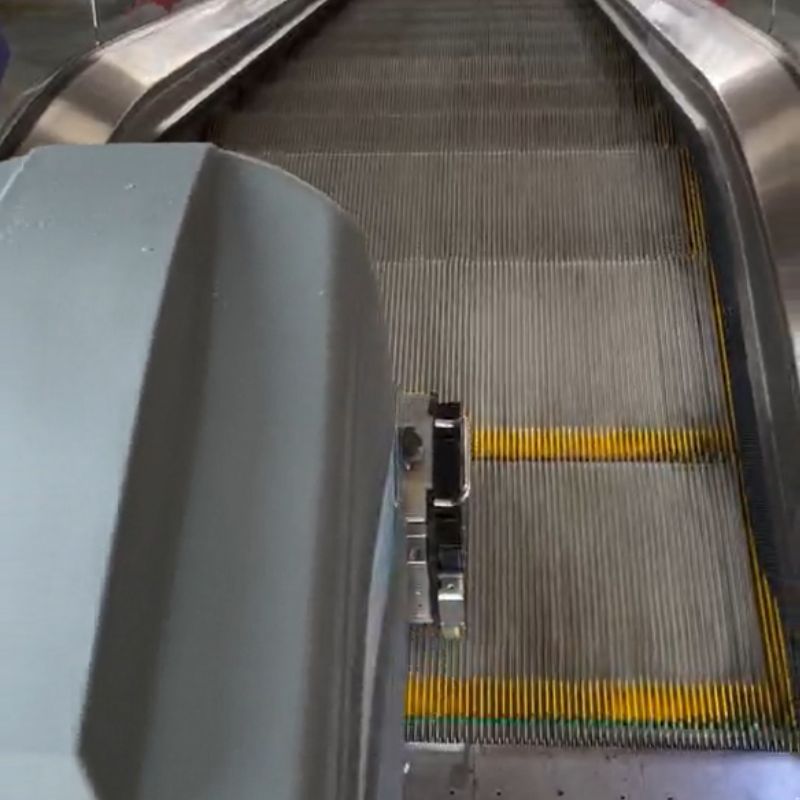
The PT510 escalator cleaning machine rides on the steps and cleans them while the escalator runs. It is an automatic escalator cleaner in the practical sense: one operator, one pass, no hand-scrubbing.
PT510 Escalator Cleaning Machine: Installation, First Run and What to Check

Yes, most lift doors have a sensor — but not all, and not the same type. How to tell what your door has in three checks, and what the sensor still cannot cover.
Do Elevator Doors Have Sensors? The Straight Answer
What an elevator ARD is, how the automatic rescue device works, what 220V and 380V models mean, how to size one for your lift, and what drives the price.
Elevator ARD: Automatic Rescue Device Guide & Specs
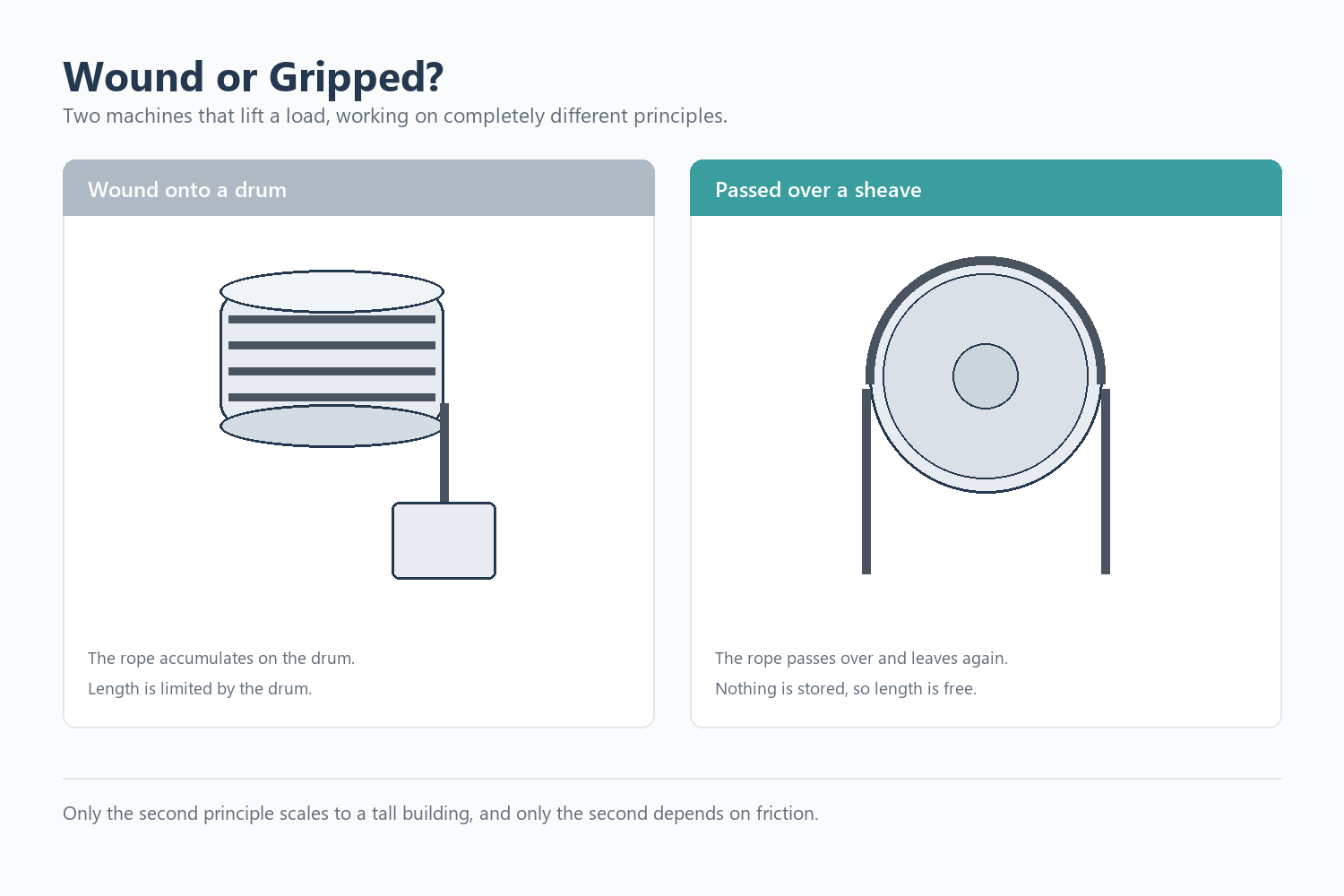
Most explanations of how an elevator traction machine works say the same thing: the motor turns a wheel, the wheel moves the ropes, the car goes up. That is true, but it skips the part that actually explains the machine.
A traction machine does not wind the ropes onto a drum. It grips them.
A traction machine does not wind the ropes onto a drum. It grips them.
How an Elevator Traction Machine Works