
Do Elevator Doors Have Sensors? The Straight Answer
author: Cloe
2026-10-15
Do elevator doors have sensors? Yes, most of them do. Almost every lift door built in the last thirty years carries one. But not all of them, and they are not all the same device.
This page answers the question in plain terms. It also shows you how to tell what your own lift has.
The Straight Answer
The answer has three parts.
First, most modern lift doors do have a sensor. It watches the doorway and reopens the doors when someone is in the way.
Second, a small number of lifts have no sensor at all. These are usually older buildings.
Third, the black strip on the door edge is not always a sensor. Sometimes it is a mechanical device that reacts only to touch.
So the answer to do elevator doors have sensors depends on the lift in front of you. Age and type decide it, not the reputation of the building.
Is It a Sensor, or a Mechanical Safety Edge?
These are two different things. The difference is easy to see once you know what to look for.
A mechanical safety edge is a rubber strip along the leading edge of the car door. It works by contact. When the strip is pressed, a small switch inside trips and the doors reopen. If nothing touches the strip, it does nothing at all.
An infrared light curtain works differently. It is a strip of infrared beams crossing the doorway. A transmitter on one door panel sends the beams. A receiver on the other panel reads them. When a beam is broken, the doors reopen, with no contact at all.
The light curtain is what most people mean by "elevator door sensor". It is fitted to the car door and travels with the car. The hall doors do not have their own sensor. The car door opens them mechanically when it arrives.
Here is the part many people get wrong. Mechanical safety edges are not extinct. You can still find them on a small share of passenger lifts today. Most are in older buildings with relay-based controls. For those lifts, the answer to do elevator doors have sensors is no. They have a contact strip, not a detector.
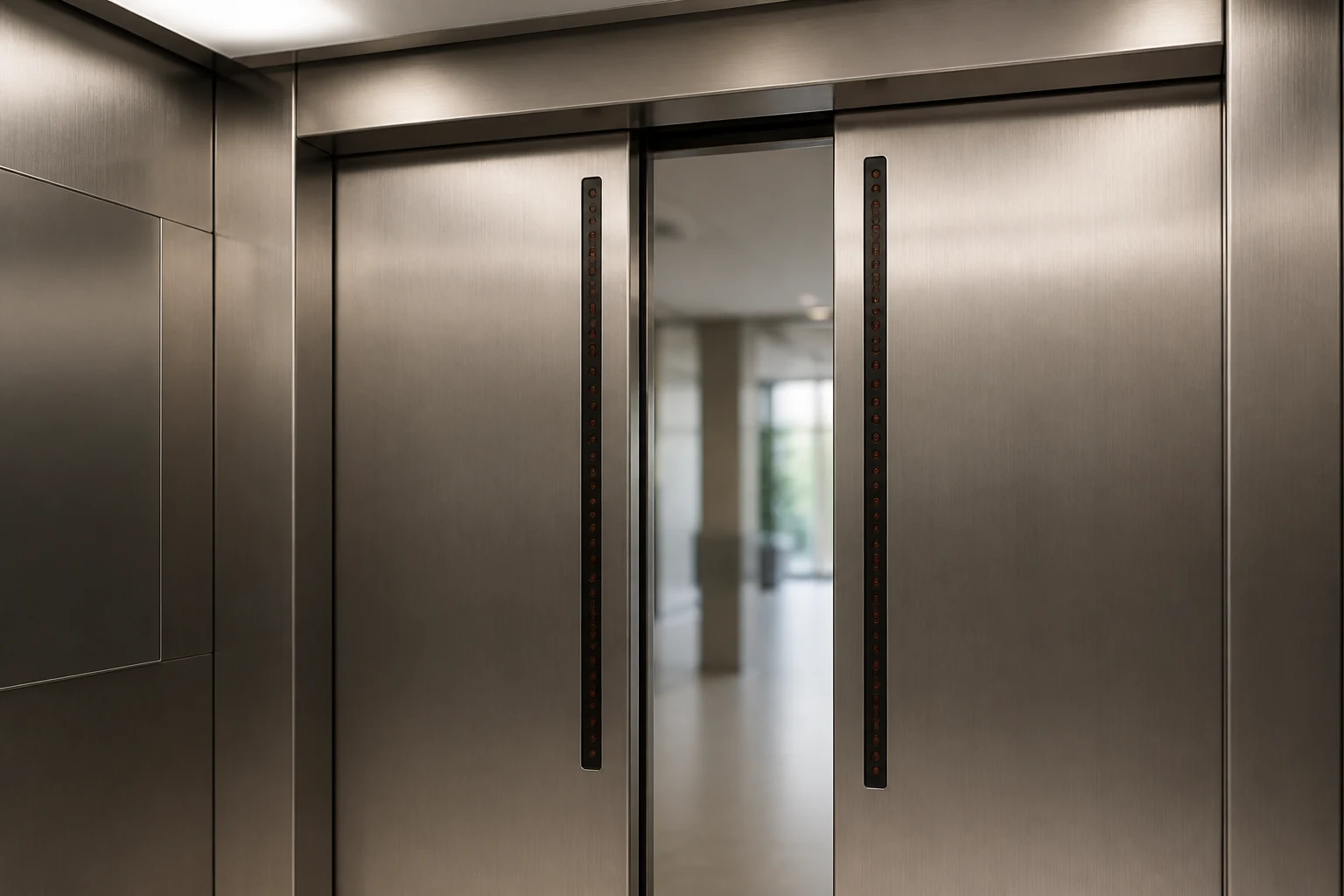
Three Checks: Does Your Lift Have One?
You can find out without opening anything or calling a technician.
Check 1: Look at the leading edge of the car door
Look at the edge of the door that slides. Choose the car door, not the landing door.
Look for a dark strip with a row of small windows or lens openings. That is an elevator light curtain. A plain rubber tube or a ribbed black bumper with no windows is probably a mechanical edge.
That one look settles most cases.
Check 2: Wave your hand across the doorway
Stand at the landing and wave a hand through the doorway. Do not touch anything.
A light curtain will hold the doors open or reopen them. A mechanical edge will not react, because nothing pressed it.
Keep your body out of the closing path. Never test a door with a child, a pet or a stick. Never use the door as a stop button.
Check 3: Listen for the warning
Hold the doors open for a while and wait. If the lift has a working detector, most models sound a warning after a set time. Then they close the doors anyway.
That warning is a strong sign that a door detector is fitted.
What a Door Sensor Will Not Cover
A sensor is not a shield around the whole doorway. Three limits are worth knowing.
The blind spot just past the hall door
The light curtain sits on the car door. It only sees what has already passed the hall door opening.
The beams may not be broken until a person is a few inches past the hall door. Add door thickness and running clearances, and that gap can be as much as 6 in, or about 15 cm.
So step through the doorway. A hand pushed in ahead of you may not be seen.
Nudge: the doors will close anyway
If something blocks the doorway for a long time, most lifts close the doors anyway.
A tone or a voice warning sounds first. The doors then close at reduced speed and limited force.
During this "nudge" operation, the door detector is effectively out of the loop. The delay varies by maker and setting. It is commonly between 15 and 30 seconds.
So a door that closes on someone is not always a fault. Sometimes the lift has simply run out of patience.
What happens when the sensor fails
A failed detector goes to a safe state. It stops the doors from closing and waits for a technician.
So a lift that refuses to close its doors is often not broken. It is being protected, exactly as designed.
Other Sensors People Mistake for Door Sensors
A lift carries several other sensing devices. They do different jobs:
-
Door position switches tell the controller where the doors are.
-
Levelling sensors line the car floor up with the landing floor.
-
Load weighing devices check whether the car is overloaded.
None of these protect the doorway, so they say nothing about door protection.
If Your Lift Has No Sensor, or an Old Type
If your lift has only a mechanical edge, or the light curtain is old, a retrofit is usually possible.
Most car door operators can carry a modern elevator light curtain. Four things decide how much work it is:
-
Whether the existing door operator can mount and power the unit
-
The width of the door opening
-
How the signal connects to the control cabinet
-
Whether the door controller will accept that input
There are also two kinds of light curtain. A 2D curtain projects a flat plane of beams across the doorway. A 3D curtain covers the entrance as a volume. It sees a person near the door, before they reach the beams.
That is why 3D door protection is often specified in hospitals, stations and busy buildings.
Cost depends on four things. The type you choose. The width and number of door panels. Whether an interface board or a new door operator is needed. And the labour on site. Ask for a survey before you accept a quote.
POTENSI supplies light curtains, mechanical edges and retrofit kits for lift doors. Send us your door operator details and your door width, and we will tell you what fits.
FAQ
Do all elevators have door sensors?
No. Most modern lifts have one. A small share of the lifts today still have only a mechanical safety edge, or an older contact device. Those are usually in older buildings.
Do elevator doors have motion sensors?
Usually they have an infrared light curtain, not a motion sensor. It reacts to a broken beam, not to movement. Some newer 3D units work more like a presence detector, because they can see a person approaching.
How does an elevator door know someone is there?
A light curtain reads the beams across the doorway. When a beam is broken, the controller holds or reopens the doors. On a mechanical edge, the door edge itself has to be pressed.
Is the black rubber strip on an elevator door a sensor?
Not always. A rubber strip with no windows in it is a mechanical safety edge. It reacts only when touched. A hand that never makes contact will not reopen the doors.
Can I add door sensors to an older elevator?
In most cases, yes. A retrofit light curtain can be fitted to the existing car door. Check the door opening width, the door operator and the control interface first.
Why did the elevator doors close on me?
Two common reasons. You may have been in the blind spot just past the hall door, where the beams cannot see you yet. Or the lift was in nudge mode. The doors had been held open long enough for the detector to be bypassed.
Conclusion
Do elevator doors have sensors? On any modern lift, most likely yes. Most of the time it works quietly, many times a day, and nobody notices.
But the protection is not the same on every lift, and it is not unlimited. Look at the door edge, run the three checks, and respect the blind spot at the hall door.
If your lift has no sensor at all, a retrofit light curtain is one of the cheapest upgrades available.
POTENSI supplies door protection parts for lifts and escalators. Contact POTENSI.
Elevator ARD: Automatic Rescue Device Guide & Specs
Related Article
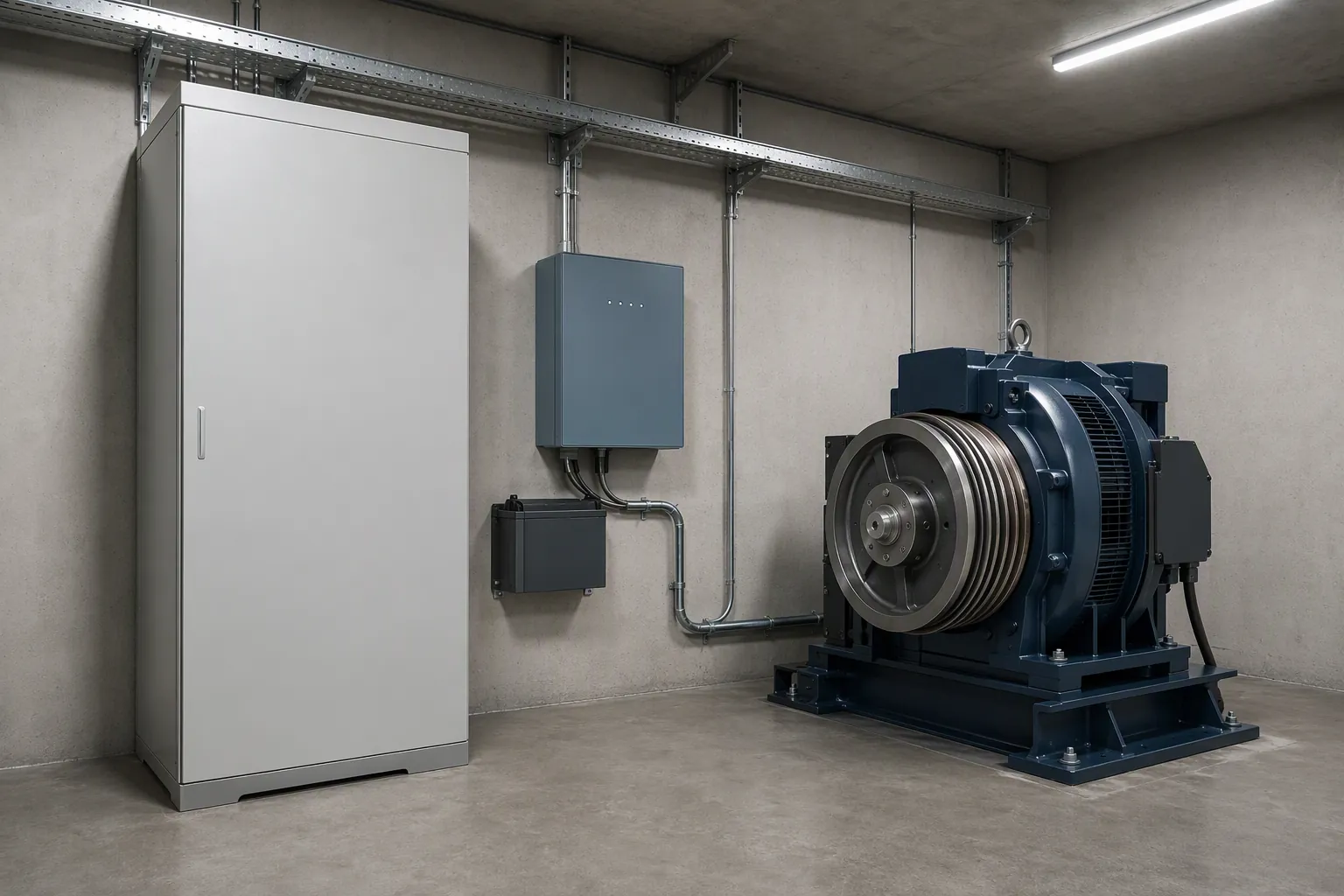
What an elevator ARD is, how the automatic rescue device works, what 220V and 380V models mean, how to size one for your lift, and what drives the price.
Elevator ARD: Automatic Rescue Device Guide & Specs
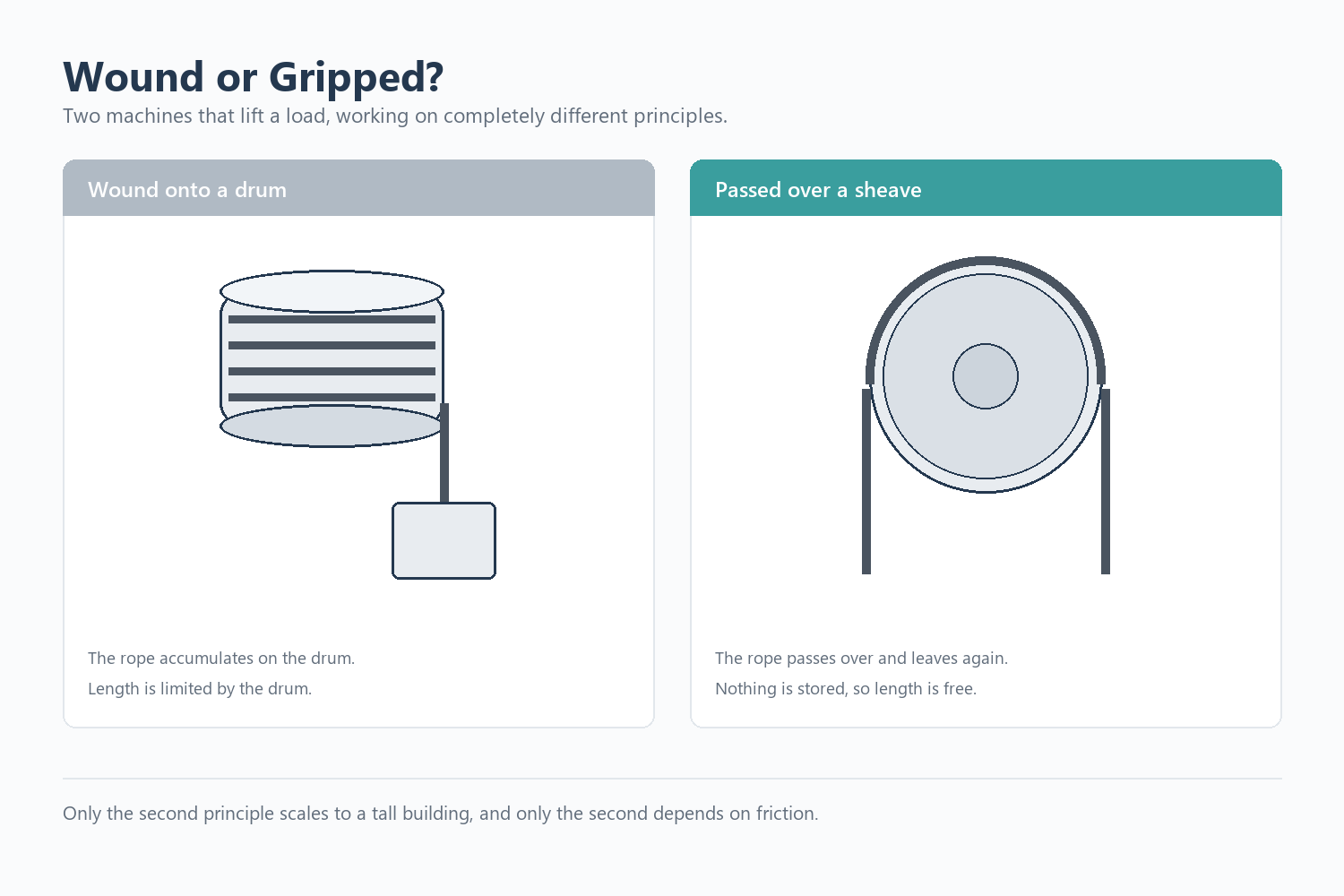
Most explanations of how an elevator traction machine works say the same thing: the motor turns a wheel, the wheel moves the ropes, the car goes up. That is true, but it skips the part that actually explains the machine.
A traction machine does not wind the ropes onto a drum. It grips them.
A traction machine does not wind the ropes onto a drum. It grips them.
How an Elevator Traction Machine Works
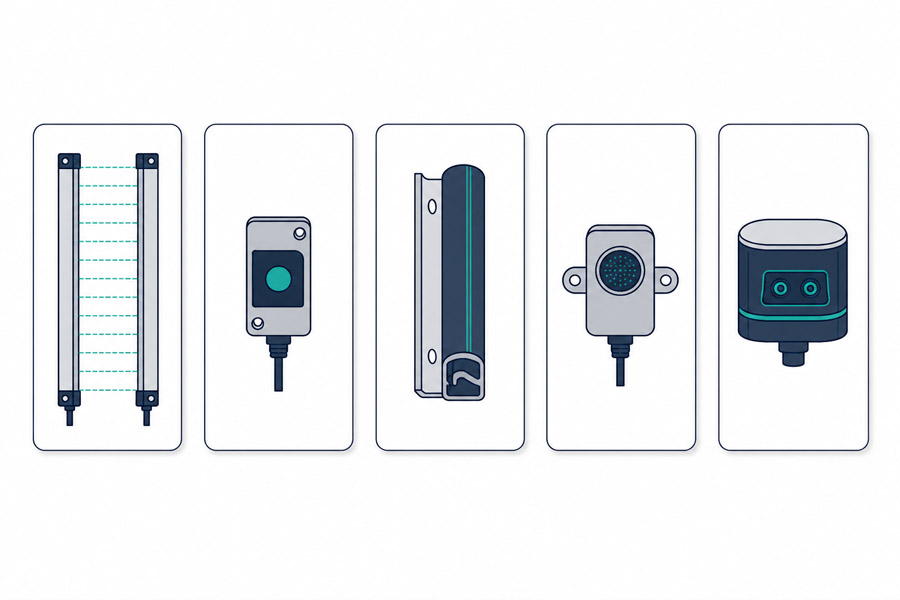
Elevator door sensor types fall into five groups: infrared light curtains, photo eyes, mechanical safety edges, ultrasonic sensors, and 3D sensors. This guide covers each type, how to identify the one you already have, and which to choose.
Elevator Door Sensor Types: How to Identify and Choose

Escalator handrail replacement may be necessary for deep cracks, exposed reinforcement, permanent deformation, or serious joint damage. Dirt, minor surface marks, poor tracking, and speed differences do not always require a new belt. A qualified technician should first inspect the handrail and related components.
Escalator Handrail Replacement: When to Repair or Replace