Escalator Handrail Replacement: When to Repair or Replace
author: Cloe
2026-09-16
Escalator handrail replacement may be necessary for deep cracks, exposed reinforcement, permanent deformation, or serious joint damage. Dirt, minor surface marks, poor tracking, and speed differences do not always require a new belt. A qualified technician should first inspect the handrail and related components.
Inspect the Complete System First
A damaged escalator handrail may result from another mechanical fault. Replacing the belt without correcting it can damage the new product.
An escalator handrail inspection should cover:
-
The outer surface, edges, joint, and inner sliding layer
-
The handrail drive wheel and pressure rollers
-
The handrail guide rollers and guide track
-
Handrail tension, tracking, and escalator handrail speed
Check for noise, vibration, heat, slipping, and side movement. Repair a worn or incorrectly adjusted handrail drive system before starting an escalator handrail replacement.

When May Escalator Handrail Repair Be Possible?
Escalator handrail repair may be considered when damage is limited and the internal reinforcement remains sound. The decision must follow the manufacturer's instructions and an on-site assessment.
Dirt, Wax, or Minor Surface Marks
Dust, oil, and anti-aging wax can make the surface look dull. Correct escalator handrail maintenance with a neutral cleaner may restore its appearance. A shallow mark that does not reach the reinforcement may also be suitable for professional treatment instead of escalator handrail replacement.
Limited Splice Damage
A small joint problem may sometimes be corrected through approved escalator handrail splicing. Repair is possible only when the surrounding material and strength layer remain in good condition. Deep separation normally requires escalator handrail replacement.
Tracking, Tension, or Drive Problems
Escalator handrail slipping can result from worn rollers, contamination, incorrect handrail tension, or a worn handrail drive wheel. If the belt remains serviceable, repairing these parts may solve the problem without escalator handrail replacement.
Signs That Escalator Handrail Replacement Is Needed
The following conditions are common reasons for escalator handrail replacement. Stop the escalator and arrange a professional inspection when serious damage is found.
1. Deep Cracks, Cuts, or Splits
A cracked escalator handrail may expose its internal layers. Escalator handrail replacement should be considered when a crack is deep, growing, or near a highly stressed area.
2. Exposed Reinforcement
Steel cords or reinforcement fabric should not be visible. If they are exposed, displaced, corroded, or broken, a surface patch cannot restore the original strength. In this condition, replace escalator handrail products with the correct specification.
3. Layer Separation
Bulging, peeling, or loose inner fabric indicates separation between functional layers. A damaged escalator handrail with extensive separation can lose strength or track poorly. Escalator handrail replacement is normally required.
4. Severe Edge Wear or Deformation
Escalator handrail wear often appears along the lips and inner edges. Replacement may be needed when the profile no longer fits the guide, the edges are badly frayed, or the belt remains deformed after tension is released.
5. Repeated Joint Failure
Escalator handrail joint failure can cause vibration, noise, or separation. Inspect the splice, guide alignment, drive parts, and tension. If the joint fails again after an approved repair, escalator handrail replacement may be necessary.
6. Heat Damage
Escalator handrail overheating may result from excessive tension, poor alignment, damaged rollers, or high guide friction. Correct the mechanical cause first. Escalator handrail replacement is necessary if heat has caused permanent hardening, cracks, or loss of flexibility.
7. Continued Slipping or Speed Difference
A clear difference between handrail and step speed can affect passenger balance. Check the drive wheel, pressure rollers, guides, and tension first. If stable movement cannot be restored, consider escalator handrail replacement.

Repair or Replace: Quick Guide
|
Condition
|
First action
|
Likely decision
|
|---|---|---|
|
Dirt or wax buildup
|
Clean and inspect
|
Continue if undamaged
|
|
Minor surface mark
|
Professional assessment
|
Repair may be possible
|
|
Poor tracking or slipping
|
Check drive, guides, and tension
|
Repair the system first
|
|
Deep crack or exposed reinforcement
|
Stop and inspect
|
Replace the handrail
|
|
Extensive layer separation
|
Stop and inspect
|
Replace the handrail
|
|
Repeated joint failure
|
Check joint and related parts
|
Replacement may be required
|
|
Permanent deformation
|
Check profile and guide fit
|
Replace if fit cannot be restored
|
This table does not replace on-site assessment.
What to Check Before Ordering an Escalator Handrail Replacement
When escalator handrail replacement is confirmed, prepare:
-
Escalator brand, model, and serial number if available
-
Existing profile and cross-section dimensions
-
Complete closed-loop length
-
Material and application environment
-
Color, quantity, sliding layer, and joint type
-
Photos of the surface, inner side, cross-section, joint, and damaged area
A rubber escalator handrail and a polyurethane escalator handrail may use different constructions. The new escalator handrail belt must match the guide profile and drive conditions. Do not order by brand, color, or length alone.
Escalator handrail replacement cost depends on profile, material, length, color, joint construction, environment, and quantity. A reliable escalator handrail supplier should confirm compatibility before giving a final quotation.
Protect the New Handrail
Before installation, correct the cause of the original escalator handrail damage. Inspect the drive wheel, rollers, guide track, and tension system. After installation, check tracking, noise, temperature, joint movement, and synchronization. Excessive tension increases friction and shortens belt life.
Conclusion
Escalator handrail replacement is normally required for deep cracks, exposed reinforcement, extensive layer separation, permanent deformation, or serious joint damage. Cleaning, adjustment, or professional repair may be suitable for limited surface problems or faults caused by related mechanical parts.
POTENSI supplies rubber and polyurethane handrails for maintenance and escalator handrail replacement projects. We support profile matching, dimension confirmation, material selection, and joint requirements. Send us the brand, model, dimensions, loop length, photos, material, color, and quantity. Contact POTENSI to confirm a suitable escalator handrail replacement and receive a current quotation.
How to Choose an Escalator Handrail: A Complete Buying Guide
Related Article
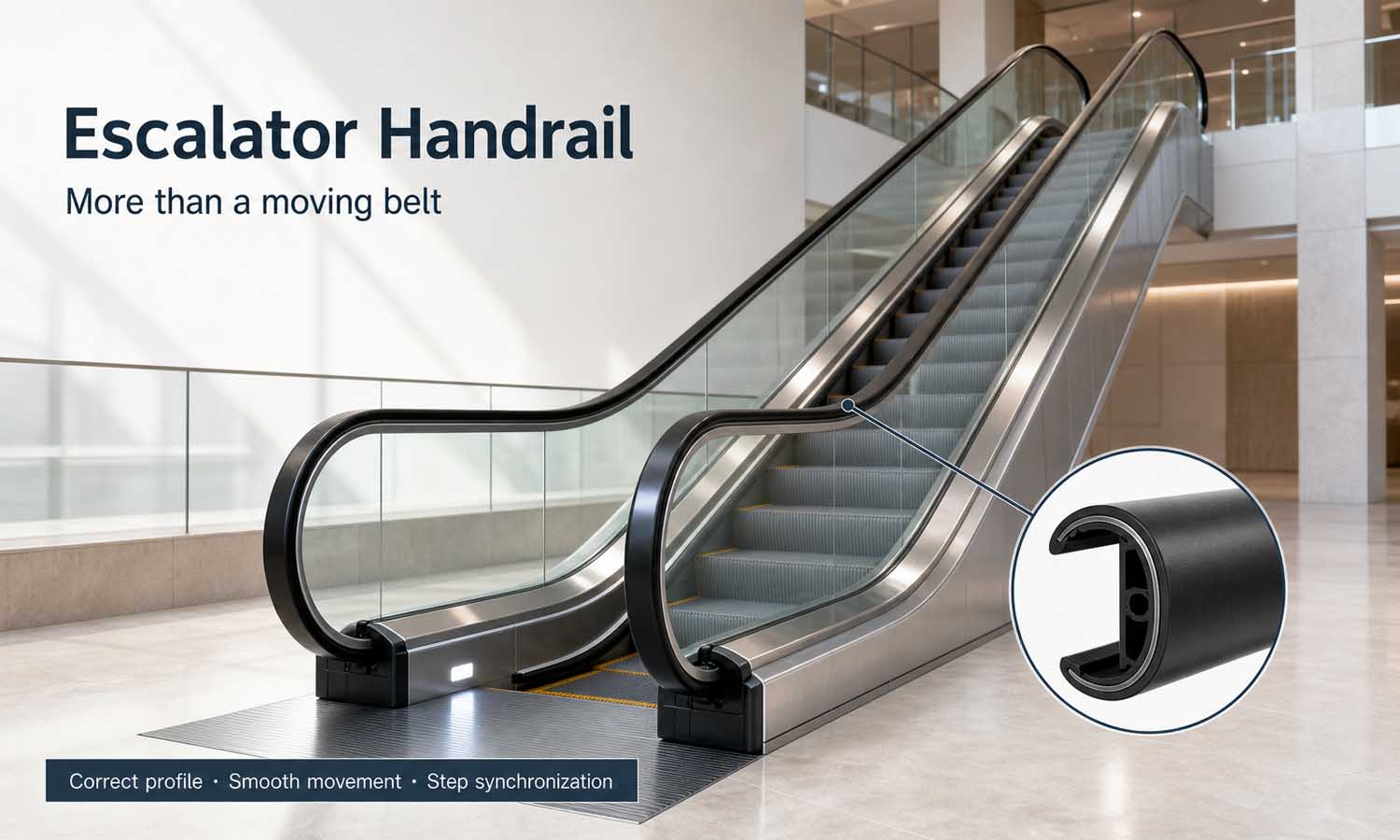
Learn how to choose the right escalator handrail by material, profile, dimensions, length, joint type, application, and supplier support.
How to Choose an Escalator Handrail: A Complete Buying Guide

Learn what elevator buttons are, how they work, common types, materials, COP and LOP applications, selection tips, replacement advice, and FAQs for elevator projects.
Elevator Buttons: Types, Functions, Materials, and Buying Guide
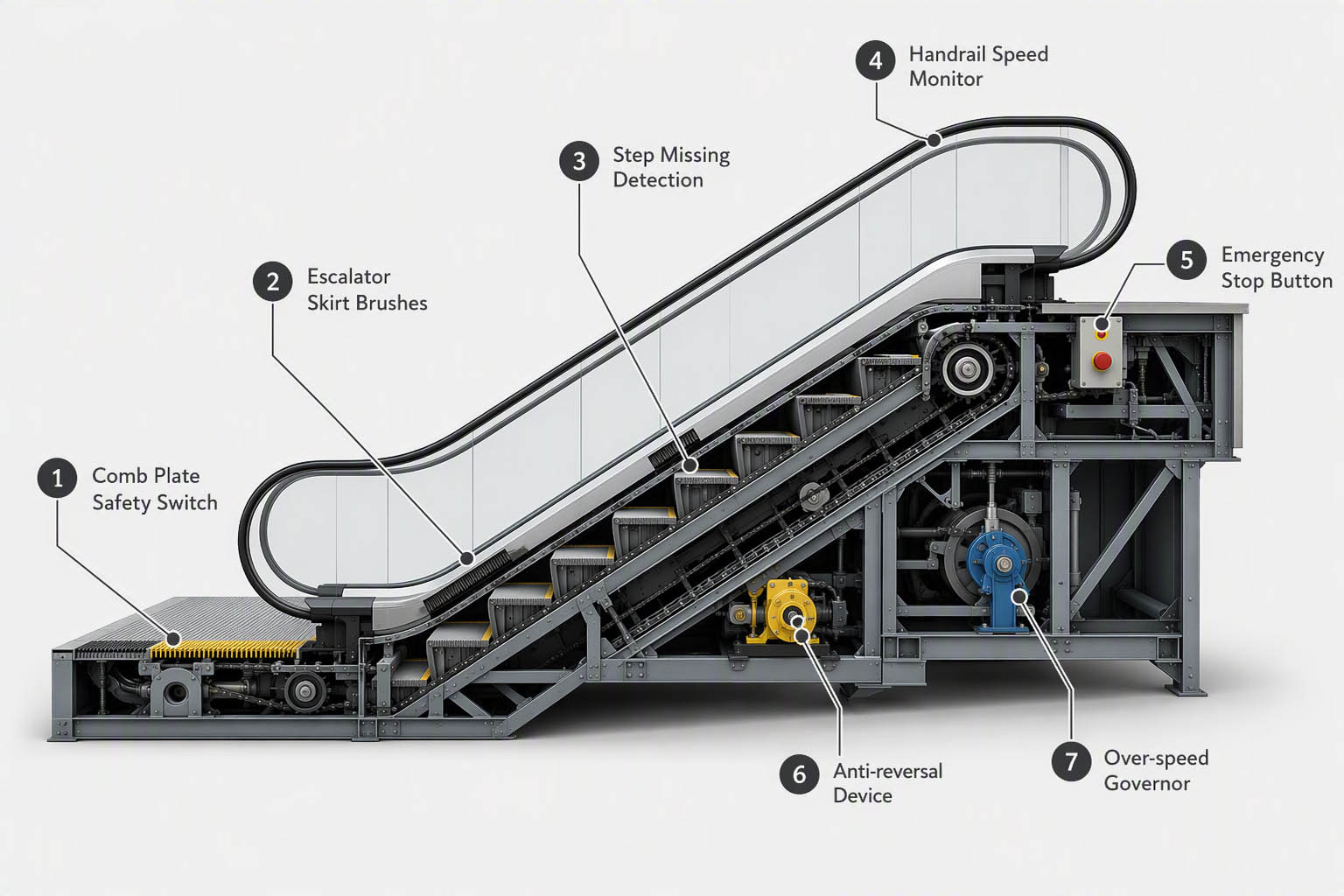
Public places like metro stations, airports, and shopping malls require highly reliable equipment. To ensure passenger safety and reduce risks, choosing the right escalator safety devices is essential. This article explains the key components needed to meet international standards and maintain safe operations in busy environments.
7 Critical Escalator Safety Devices You Must Know for High-Traffic Areas