
PT510 Escalator Cleaning Machine: Installation, First Run and What to Check
author: Cloe
2026-10-27
What this escalator cleaning machine is
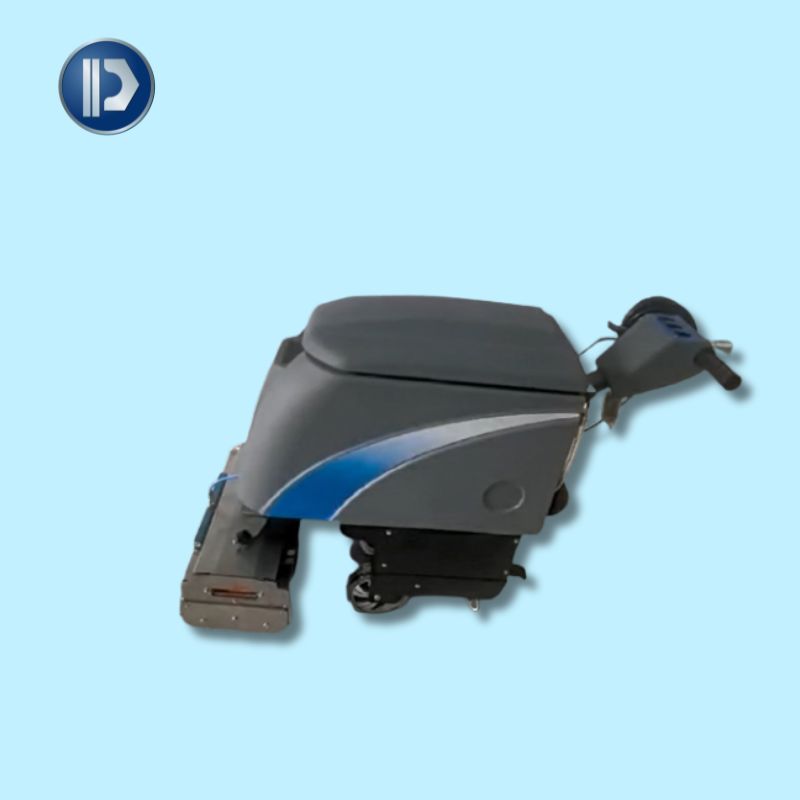
The PT510 escalator cleaning machine rides on the steps and cleans them while the escalator runs. It is an automatic escalator cleaner in the practical sense: one operator, one pass, no hand-scrubbing.
The operator sets it on the steps, locks it in place and starts the brush. The escalator carries it up or down. The treads are brushed, and the dirty water is drawn back into the machine.
That is the whole idea. No scaffolding. No dismantling. No hand-scrubbing of several hundred grooves.
It runs on 220 V mains and draws 2100 W. It weighs 95 kg, and the brush covers 510 mm of tread. Those three numbers decide most of what follows.
How an escalator cleaner works
Three things happen at once.
The brush turns against the tread. The bristles reach into the grooves, where dust and grit collect and where a mop cannot follow.
Water goes onto the tread. It loosens what the brush alone would only push around.
The machine recovers the dirty water as it goes. This is the part that matters most on a live site. Wet steps and moving handrails are a slip risk, so recovery is not a luxury feature. It is what separates an escalator step cleaning machine from a brush on a pole.
An escalator step cleaner that only brushes moves the grit around. The water loosens it, and the recovery takes it away. All three run while the escalator moves.
Five safety rules, before anything else
Close both ends of the escalator. Barriers top and bottom. The escalator may keep running for the machine, but no passenger goes on it. Running and open to the public are two different things, and confusing them is how accidents happen.
Never leave it working unattended. A machine on a moving escalator is a hazard, not a labour saving.
Lock the brake before the brush goes down. If the brake is not set, the machine will not hold its position.
Keep hands clear of the brush while it turns. Isolate the power before you clear a jam or change a brush.
Check the supply first. At 220 V the machine draws 2100 W, about 9.5 A. A circuit shared with lighting may not hold it.
Installing it on the steps
The escalator cleaner installation below follows the order of our own installation video. Work through the six steps in sequence.
1. Fit the handle. The machine arrives on a pallet. Fit the handle first, so you can lift and position it.
2. Fit the side brackets. One on each side. These hold the machine square on the steps.
3. Fit the brush the right way round. The brush has a locating feature on one face. That face goes inward, toward the machine. Fit it backwards and it will not seat properly.
4. Fit the guard over the brush. This is the plate that sits above the brush and keeps water and debris contained.
5. Connect the hose at the quick-coupling. Push it on until it clicks. Check it by pulling gently.
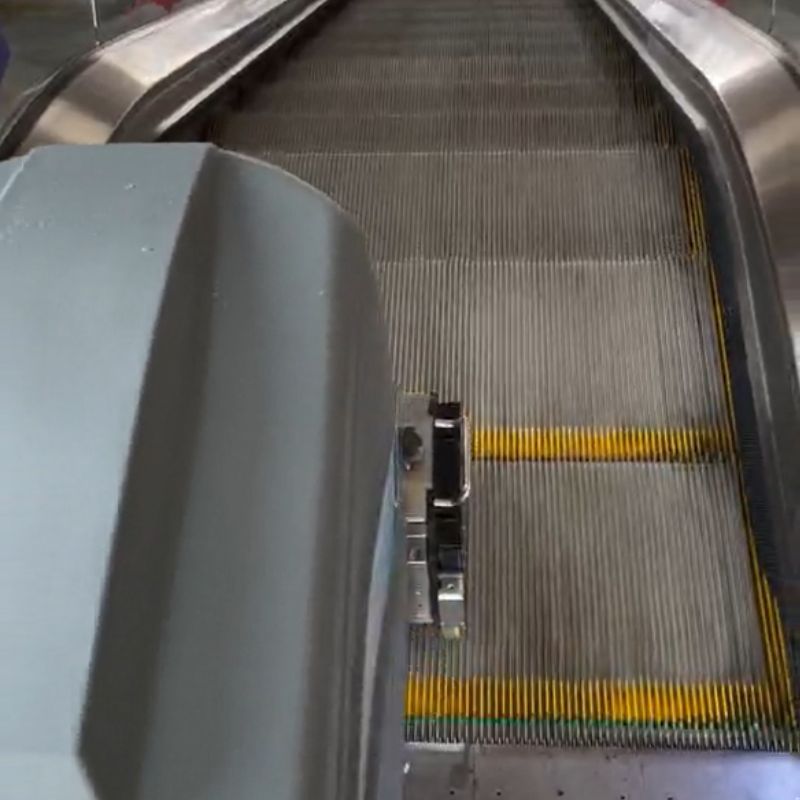
6. Set the machine on the steps and level it. At 95 kg this is a two-person lift. The machine must sit square across the treads, not skewed. A skewed machine is the main cause of marking.
Take the alignment check seriously. It is the one installation step that affects both the cleaning result and the risk of damage.
The first run, step by step
With the escalator cleaning machine in place and the section closed:
-
Fill the 32 L clean tank and connect the water.
-
Lower the brush until it meets the tread. Do not force it down.
-
Lock the brake.
-
Start the brush.
-
Start the escalator and let it complete one pass.
-
Watch the tread behind the machine, not in front of it. That is where you see whether recovery is working.
-
At the end of the pass, stop the brush and raise it. Then stop the escalator.
-
Empty the 35 L recovery tank and rinse the brush.
One pass is a test run, not a finished job. Escalator deep cleaning takes more than one pass on a neglected machine. Judge the first pass on two things. Are the grooves visibly cleaner? Is the tread dry enough to walk on?
The clean tank holds 32 L and the recovery tank 35 L. The dirty side has a little headroom, so you will run out of clean water before you overflow.
What your site must supply
Four things, and it is better to confirm them before you order an escalator cleaner machine.
A section you can close. If the escalator cannot be taken out of public use for the length of a clean, no machine solves that.
A power point within reach. The cable is 15 m. Measure the route you will actually run it, not the straight line, and keep the cable off the steps. The machine is built for 220 V / 50 Hz. If your site runs 110 V or 60 Hz, tell us before you order.
The right tread width. The brush covers 510 mm. On a 600 mm tread, one pass gets most of the width and leaves a narrow strip at each edge. On 800 mm and 1000 mm treads the gap is wide enough to need a second pass, offset. Measure your tread before you plan the job.
A route to get the machine there. Stairs, a service lift or a delivery entrance. A machine that cleans well but cannot reach the escalator is no use.
Where it earns its money
Escalators get dirty in the same places everywhere. Shopping malls, metro stations, airports and hospitals have two things in common. Heavy foot traffic, and grooves that hold grit.
Ask ten people how to clean escalator steps and you will get ten answers. Most of them involve a brush, a bucket and a lot of kneeling.
Most escalator cleaning equipment is bought after a bad month, not a good one. Either the treads stopped looking presentable, or the comb plates started collecting grit faster than anyone could clear it.
The argument for a machine is repeatability. The same method, the same result, whoever runs it. That is what lets a contractor put escalator cleaning in a contract. It also lets a building schedule the work instead of improvising it.
Will it damage the steps?
This is the question buyers ask last and worry about most. For any escalator tread cleaner, the honest answer is that the risk sits in setup, not in the brush.
Alignment. A machine that sits skewed rubs where it should not. This is the main cause of marking on treads, and it is why the levelling step is not optional.
Brush contact. The brush should meet the tread, not press into it. Set it down until it touches, then stop.
The comb plates. The machine crosses the comb at both ends of the run. Check the brush has lifted clear before you take it over a comb.
None of this needs special skill. It needs the setup done properly, every time, not just the first time.
Six questions to ask before you buy any escalator cleaner
Ask these of us. Ask them of anyone else selling you an escalator cleaning machine.
-
How many steps can it clean before the recovery tank must be emptied? This decides whether you clean one escalator or three in a session.
-
Does the cleaning width cover your tread in one pass? The PT510 brush is 510 mm. On a 1000 mm tread that leaves half the step for a second pass.
-
How much does it weigh, and how many people does it take to move? The PT510 is 95 kg, so two people. That is a labour cost on every job.
-
What power does it need, and how long is the cable? The PT510 wants 220 V / 50 Hz and gives you 15 m. Check the socket distance before you commit.
-
What wears out, and what does a replacement set cost? Brushes are the running cost. Ask for the price before you buy the machine, not after.
-
What keeps it on line? If a machine wanders across the treads, the operator spends the job correcting it instead of cleaning.
Escalator cleaner maintenance and consumables
Brushes wear. Check the bristles after every few sessions. Replace the set when the bristles no longer reach the bottom of the grooves.
Rinse the recovery tank and filter after every session. Dirt left in the tank sets hard and starts to smell.
Inspect the hose and coupling. These take the most abuse, and a leaking coupling shows up as wet steps behind the machine.
Keep one spare brush set on site. A worn brush is the most common reason a machine suddenly "stops cleaning".
Talk to us about the PT510
The PT510 escalator cleaner is supplied by POTENSI, an escalator cleaning machine supplier based in Shandong, China. Tell us your tread width and how many escalators you look after. We will tell you whether the PT510 fits the job.
Do Elevator Doors Have Sensors? The Straight Answer
Related Article
Yes, most lift doors have a sensor — but not all, and not the same type. How to tell what your door has in three checks, and what the sensor still cannot cover.
Do Elevator Doors Have Sensors? The Straight Answer
What an elevator ARD is, how the automatic rescue device works, what 220V and 380V models mean, how to size one for your lift, and what drives the price.
Elevator ARD: Automatic Rescue Device Guide & Specs
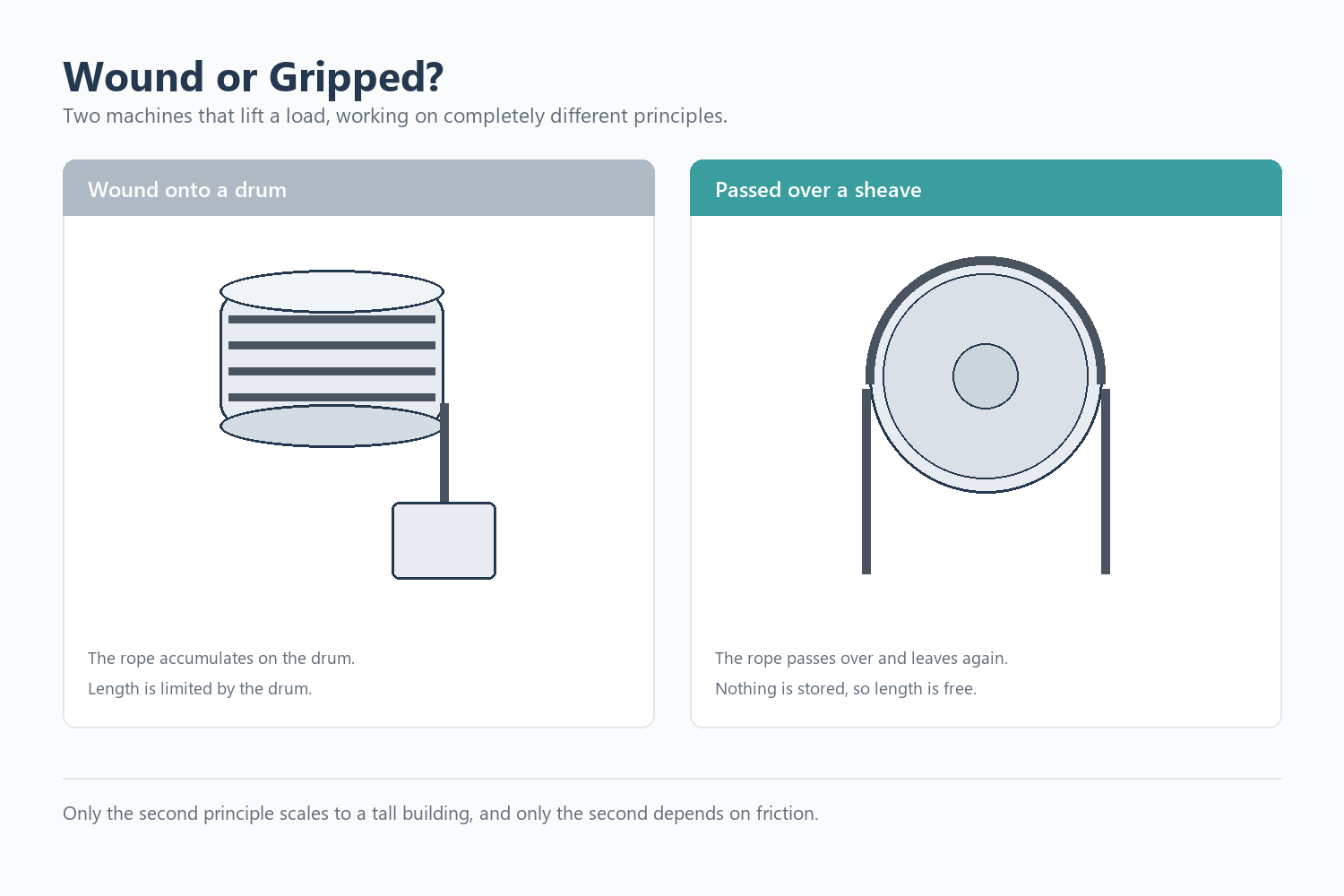
Most explanations of how an elevator traction machine works say the same thing: the motor turns a wheel, the wheel moves the ropes, the car goes up. That is true, but it skips the part that actually explains the machine.
A traction machine does not wind the ropes onto a drum. It grips them.
A traction machine does not wind the ropes onto a drum. It grips them.
How an Elevator Traction Machine Works
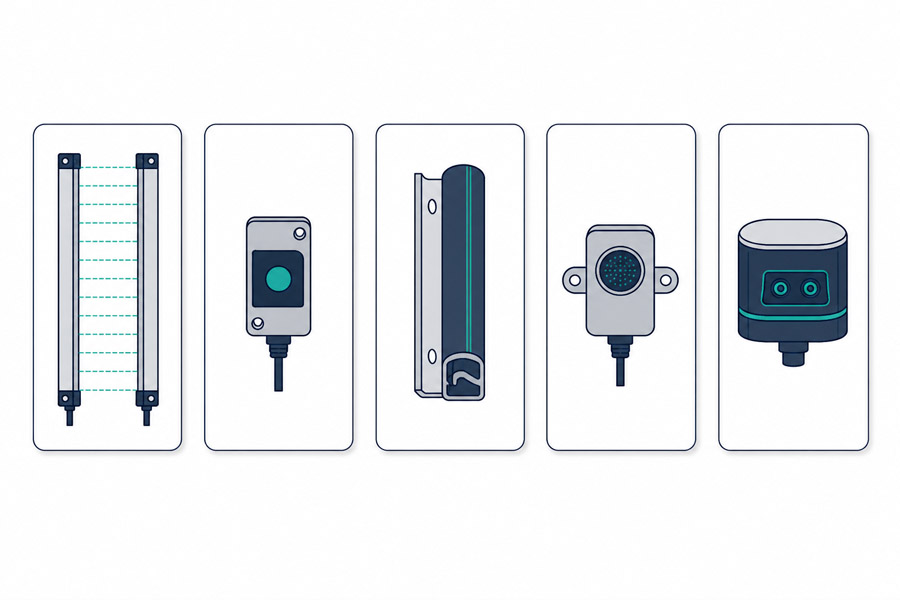
Elevator door sensor types fall into five groups: infrared light curtains, photo eyes, mechanical safety edges, ultrasonic sensors, and 3D sensors. This guide covers each type, how to identify the one you already have, and which to choose.
Elevator Door Sensor Types: How to Identify and Choose