When to Replace an Elevator Deflector Sheave or Just Its Bearing
Elevator deflector sheaves guide control and compensation chains smoothly through the pit, playing a vital role in load balancing and ride comfort. When these sheaves start making noise, wobbling, or binding, many maintenance teams wonder: “Can we save time and money by replacing only the bearing?” Or do we need to swap out the entire deflector sheave assembly? In this article, we’ll walk through clear, practical advice on how to decide, based on the sheave material and bearing condition, so you can make the best choice for safety, cost, and quick elevator recovery.
Understanding Deflector Sheaves and Bearings
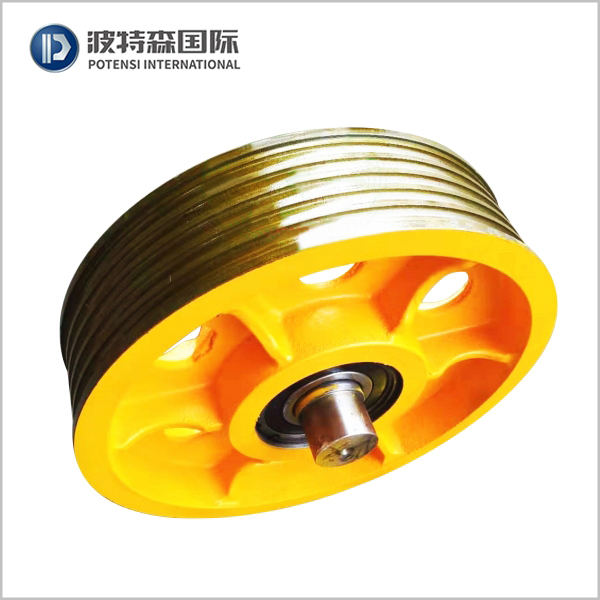
A deflector sheave is a pulley that redirects control or compensation chains in the elevator pit. It consists of:
- Sheave Body: The wheel-like part, made of plastic or metal, with a groove that matches the chain.
- Bearing: Press-fit inside the sheave body, allowing it to spin smoothly on its axle or shaft.
When either the sheave body or its bearing wears out, you’ll notice symptoms like grinding noises, vibration, or chain binding. Let’s explore when to replace the whole assembly versus only the bearing.

Replace the Entire Deflector Sheave
Plastic Deflector Sheaves
Recommendation: Always replace the complete assembly (sheave plus bearing).
Key Reasons:
- Low Material Strength: Plastic wears and deforms more easily than metal.
- Hidden Damage: Bearing failure often accompanies cracks, groove wear, or distortion in the plastic body.
- Risk of Repeat Failure: Even if a new bearing fits, the weakened plastic body can fail soon after, causing a repeat breakdown.
In Practice: We’ve seen plastic sheaves whose grooves look fine on the outside but have internal cracks around the bearing seat. Pressing in a new bearing only delays the next breakdown.

Metal Deflector Sheaves with Severe Bearing Damage
Recommendation: Replace the entire deflector sheave.
Signs to Look For:
- Burst or Split Bearing: Metal fragments inside the sheave or broken bearing cage.
- Scored or Oval Bore: Deep grooves or out-of-round wear in the sheave’s inner bore from a seized bearing.
- Stuck Bearing: The Bearing can’t be removed without force.
Key Reasons:
- Bore Damage: A cracked or scored bore won’t hold a new bearing tightly, leading to wobble or off-center rotation.
- Time vs. Risk: Machining a new metal sheave (boring, heat treatment, dynamic balancing) can take 2–3 days, too long for critical elevator service. Replacing from stock gets you back online in hours.
In Practice: For busy buildings, we choose a ready-to-install metal sheave over risking an unstable bearing fit that might fail on Day 2.
When You Can Replace Just the Bearing
Metal Deflector Sheaves with Minor Bearing Wear
Recommendation: You may replace only the bearing if the sheave body shows no damage.
Suitable Conditions:
- Outer Race Intact: The bearing’s outer ring must be free of deep scratches or wear.
- Clean, Round Bore: The sheave’s inner bore must stay within the manufacturer’s diameter tolerance (typically ±0.05 mm).
- Bearing Damage Confined Inside: Only the inner cage, balls, or roller elements are worn—outer race and seals intact.
How to Proceed:
- Heat the Sheave (200–300 °C) or use a hydraulic puller to ease bearing removal—never hammer directly on the wheel.
- Clean the Bore: Remove all grease, corrosion, or dirt.
- Measure the Bore with calipers. If it meets spec, proceed.
- Press In the New Bearing using a press tool that only contacts the outer race, protecting the seals.
In Practice: When we find a clean bore and no signs of scoring, bearing-only replacement takes under an hour and costs a fraction of a full sheave swap.

Comparing Costs and Risks
| Scenario | Cost | Downtime | Risk |
| Plastic sheave, any bearing damage | Low–Medium | Low (1–2 hrs) | Low (new assembly reliable) |
| Metal sheave with burst/oval bore | Medium–High | Low (1–2 hrs) | Medium (new sheave restores integrity) |
| Metal sheave, only bearing damaged | Low | Very Low (<1 hr) | Low (if bore within tolerance) |
- Only Bearing Swap: Cheapest and fastest—if the sheave body is perfect.
- Full Sheave Replacement: Slightly higher cost, but removes the risk of hidden bore damage and future failure.
Conclusion
Deciding whether to replace an entire deflector sheave or just its bearing comes down to material and damage type. Plastic sheaves always need full replacement, while metal sheaves with a sound bore can often get by with a bearing swap, saving time and money. However, when in doubt, replacing the complete assembly ensures reliability and avoids repeat breakdowns.
As a specialized elevator parts supplier, POTENSI offers high-quality deflector sheaves and precision bearings to meet your needs. Contact us today to discuss your next maintenance project and get expert advice on the right parts for your elevator system. Together, we’ll keep your elevators running safely, smoothly, and cost-effectively.
Happy Labor Day!
Why Replacing All Wire rope When One Fails?
Related Article