How to Identify Wire Rope Slippage?
In daily elevator operation, we sometimes encounter strange issues, like an elevator stopping slightly above the floor or reporting system errors with no obvious cause. Often, one of the culprits behind these problems is wire rope slippage.
While it may not sound like a serious issue, wire rope slippage can affect ride comfort, leveling accuracy, and long-term safety. In this article, we’ll explain what slippage is, how to detect it, and what steps to take if your elevator is experiencing this issue.
What Is Wire Rope Slippage?
Wire rope slippage happens when the traction between the wire ropes and the traction sheave is no longer sufficient, causing the ropes to slip during elevator movement. This can result in:
- Inaccurate leveling, especially when the elevator travels from the top floor to lower levels.
- Frequent fault codes, depending on the control system in use.
For example:
- The STEP system may show faults 20, 27, or 28.
- The Monarch system may report errors like 22 or 30.
If left unchecked, wire rope slippage can lead to premature wear of components or even unsafe operation.
How to Check for Wire Rope Slippage?
If you suspect slippage, here’s a simple test that doesn’t require complicated tools:
1. Confirm Balance Ratio
Before checking for slippage, make sure the counterweight balance is correct. An imbalanced system may give misleading results.
2. Empty the Car and Park on the Top Floor
Ensure the car is empty and fully parked on the top floor in a normal leveling position.
3. Mark the Ropes and Sheave
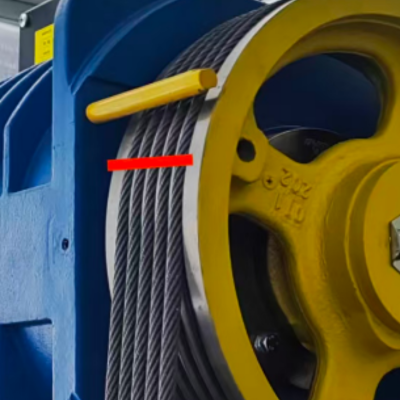
Use chalk or a marker to draw a straight line across all the wire ropes and the traction sheave. This mark will act as a reference point.
4. Run the Elevator Down and Back Up
Let the elevator travel from the top to the bottom floor and then return to the top.
5. Check the Alignment
Look at the line you drew. If the line on the ropes and sheave is still aligned, slippage is unlikely.
If the alignment is off by more than 10 cm, it’s a clear sign of rope slippage.
Also, if the markings on individual ropes no longer form a straight line, it indicates uneven tension, which can lead to slippage.
What Causes Slippage?
Once you confirm slippage is happening, it’s time to fix the root cause. Here are the most common causes and how to resolve them:
1. Uneven Tension in Wire Ropes
If the ropes aren’t equally tensioned, some may slip more than others.
Solution: Adjust the tension on all ropes using a rope tension meter. All ropes should carry the load equally.
2. Insufficient Wrap Angle on the Sheave
The wrap angle refers to how much of the rope wraps around the sheave. A small angle means less friction.
Solution: Adjust the position of the deflector sheave to increase the rope's wrap angle. This gives a better grip on the sheave.
3. Oil or Dirt on the Ropes
Oily or dusty ropes can easily slip on the sheave.
Solution: Clean the ropes with kerosene or a safe solvent to remove oil and dirt. Avoid using harsh chemicals that could damage the rope.
4. Rope Wear
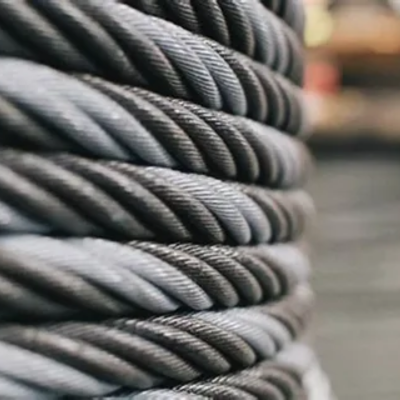
If the wire ropes are worn out or undersized, the contact area with the sheave decreases, reducing friction.
Solution: Measure the rope diameter. If the measured value is more than 7% smaller than the nominal size (e.g., 10 mm rope measuring under 9.3 mm), it’s time to replace the ropes.
5. Sheave Groove Wear
A worn traction sheave groove loses its grip, leading to rope slippage.
Solution: Inspect the sheave for groove depth and shape. If the groove is flat or clogged with oil residue, clean or replace the sheave.
6. Aggressive Acceleration/Deceleration
Sharp changes in speed can increase the chance of slippage, especially in older systems.
Solution: Fine-tune the elevator's start and stop parameters via the controller settings to create smoother transitions.
7. Low Car Weight
If the car or counterweight is too light, there may not be enough load to maintain friction.
Solution: Add a small counterweight block to the top of the car and inside the counterweight—but only after confirming with the elevator manufacturer. Never add weight arbitrarily.
Why It Matters
Wire rope slippage isn’t just a technical issue. It impacts:
- Passenger safety: Inaccurate leveling increases trip hazards.
- Equipment life: Slippage causes extra wear on the motor, sheave, and ropes.
- System efficiency: Frequent fault codes mean more maintenance time and costs.
Conclusion
Wire rope slippage might seem like a minor issue at first, but left unchecked, it can lead to bigger safety and maintenance problems. The good news is that with a few simple checks—and by working with the right supplier—you can diagnose and correct the issue before it becomes serious.
Need high-quality elevator wire ropes or deflector sheaves? Contact POTENSI today and let us support your next maintenance project.
Professional Elevator Traction Machine Buying Guide
What are the different types of elevator brakes?
Related Article