Mitsubishi elevator common “Freeze” faults analysis
Mitsubishi elevators are known for their smooth rides and dependable performance. Still, like any complex machine, they can occasionally “freeze” at certain floors. For building managers and maintenance teams, knowing the typical freeze-up causes and quick checks can save time and keep passengers moving. Below, we’ve boiled down nine of the most common Mitsubishi freeze faults—based on field experience—into easy-to-understand symptoms, simple checks, and straightforward fixes.
1. Top & Bottom Landing Stops
Symptom: The car always stops or freezes at the lowest or highest floor, but works fine elsewhere.
Quick Check:
- Listen for the click of the top/bottom limit switch as the car approaches.
- Look at the clearance between the car’s trip arm and the switch lever (roughly 6 cm).
Simple Fix: Adjust or replace the slow speed or limit switch so the elevator knows it’s reached the end of travel.
2. Random Load Weight Errors
Symptom: The car freezes randomly at different floors, and the display briefly flashes a weight system error.
Quick Check:
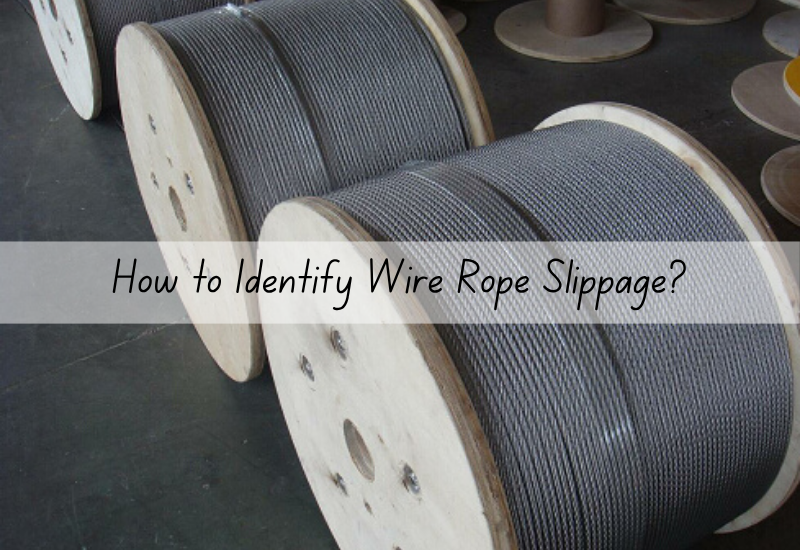
- See if the car slips on the hoist ropes (look for rope wear or loose tension).
- Lightly tap the load sensor box in the pit—loose connections often cause hiccups.
Simple Fix: Tighten or re calibrate the load sensor and tension ropes. If sensors are old, swap in fresh ones.

3. Brake
Related Freezes
Symptom: The elevator stops with doors closed, and the machine room board shows a brake message. After resetting, it moves again.
Quick Check:
- Measure the gap on the brake (a few millimeters).
- Watch the brake solenoid—does it pull in cleanly?
Simple Fix: Adjust the brake clearance and make sure the brake switch detects open/closed correctly.
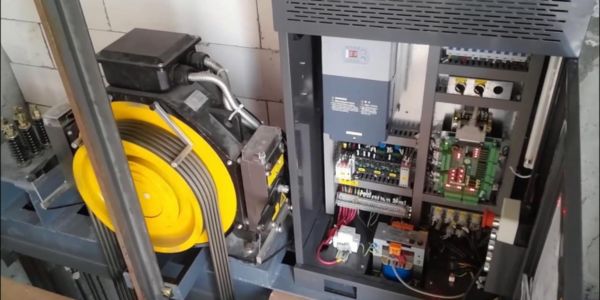
4. Controller Board Glitches
Symptom: The display lights up “888” at start (which is normal), but then the car stalls in the leveling zone, showing an E code.
Quick Check:
- Note any “E” series code after the “888” self-test—for instance, E2 or E20.
- Power cycle the controller to see if the code returns immediately.
Simple Fix: Look up the specific E code in the Mitsubishi manual. Often, it’s a bad sensor or board power issue—you can clear the code or replace the small module.
5. Door
Operator Sensor Faults
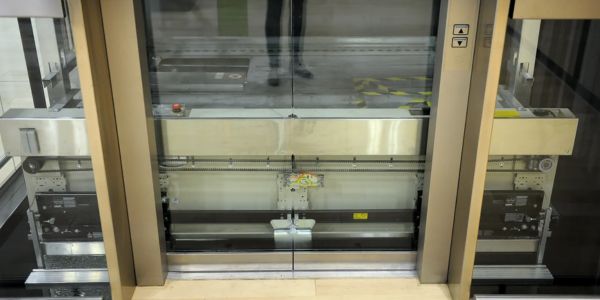
Symptom: Doors hesitate, reverse without reason, or show a door machine sensor error.
Quick Check:
- Watch the photo eye or mechanical sensor as the door moves.
- Check wiring at the sensor plug—it can loosen over time.
Simple Fix: Realign or replace the door position sensor and secure its wiring.
6. Leveling & Re-Leveling Hiccups
Symptom: The car never “learns” floors properly or pauses in the leveling zone.
Quick Check:
- Test the floor level sensors—you should see a stable voltage when the car is level.
- Press the reset button on the controller; does the car adjust?
Simple Fix: Replace any faulty leveling sensors and make sure the reset switch is clicking on and off.
7. Light
Curtain & Safety
Edge Stops
Symptom: The doors stay open with a “U” fault, or the car drifts, and the floor gap grows.
Quick Check:
- Look at the light curtain beam or safety edge rubber—are they clean and straight?
- Verify the light curtain power box is on its supply.
Simple Fix: Realign or swap out the light curtain or safety edge, then test the door closing once more.
8. Car Panel Communication Errors
Symptom: Hall call lights flicker, or the car panel shows a bus error code.
Quick Check:
- Wiggle the cable between the car top and the car panel—do lights flicker?
- Confirm the panel’s termination resistors are in place.
Simple Fix: Reseat or replace the twisted pair cable, and ensure proper end resistors. If the panel itself is old, swap it out.
9. Hall
Call Button Glitches
Symptom: Some floor buttons won’t call the car or only work sporadically.
Quick Check:
- Press each landing button while watching the hall call board LED.
- Inspect button wiring at the bottom landing for loose plugs.
Simple Fix: Replace the faulty landing call board or tighten up the wiring harness and check the termination resistor on that floor.
Conclusion
Freezes and stalls don’t have to mean long downtime. By following these quick checks and fixes, you can often get Mitsubishi elevators back in service fast. For reliable, high-quality replacement modules, sensors, switches, and boards, contact POTENSI—your trusted elevator parts supplier. Our team is ready to help you troubleshoot, source the right parts, and keep your elevators running smoothly.
What are the different types of elevator brakes?
How Much Guiding Travel Should Elevator Rails Have?
Related Article