What are the different types of elevator brakes?
In the world of vertical transportation, safety is everything. One of the most essential safety components in an elevator is the brake system, often referred to as the elevator brake or brake device. It's the component that ensures the elevator stops when it should, holds position securely, and keeps passengers safe at all times.
As elevator parts suppliers, we’re often asked about elevator brakes—what they are, what types exist, and what the standards require. In this article, we’ll break down the basics in a simple and professional way, so you can better understand how elevator braking systems work and why choosing the right one matters.
What Is an Elevator Brake?
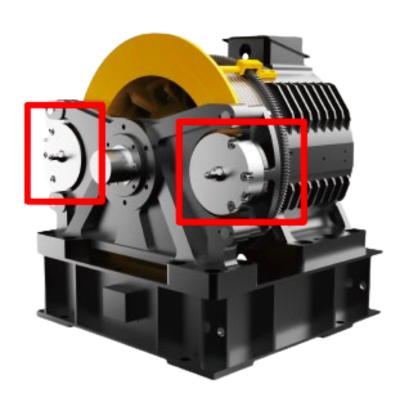
An elevator brake is a mechanical device that can slow down, stop, or hold a moving elevator in place. It typically operates using friction, pressing brake pads or blocks against a rotating surface like a traction sheave or brake disc.
Importantly, according to international safety standards, elevator brakes must be fail-safe, which means they automatically engage to stop the elevator when power is lost. This is the core principle behind safe elevator braking.
What Kind of Brake Does an Elevator Need?
Let’s look at the main requirements based on GB7588 and TSG T7001 (technical codes widely referenced in the elevator industry):
- Automatic Action on Power Loss
The brake must engage automatically when electrical power is cut. This ensures the elevator stops safely in any emergency. - Friction-Based Braking
Elevators should use friction-type brakes. Other braking mechanisms can be used as a secondary system, but friction is the primary requirement. - Two Independent Mechanical Parts
The brake must have at least two separate mechanical components. This ensures that if one fails, the other can still hold or stop the elevator. Also, the brake must be designed so that it can be tested externally, from outside the elevator shaft.
These rules apply to all modern elevator brake systems and ensure both safety and compliance.
Types of Elevator Brakes
Let’s go through the common brake types used in elevators and highlight their differences.
1. Block-Type Brakes
External Block Brakes
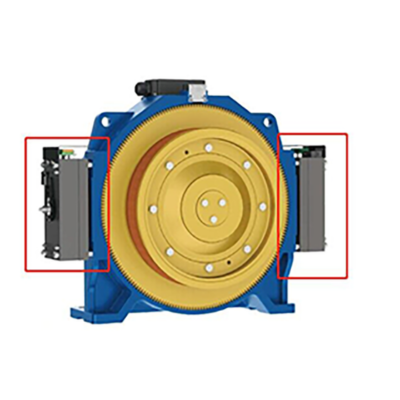
This is the most widely used type. The brake pads are positioned on the outside of the traction sheave (the wheel that moves the ropes).
- Uses springs and electromagnetic coils to apply and release braking force.
- When powered, the coil lifts the brake block; when unpowered, the spring pushes it back to stop the elevator.
- Advantages: Simple structure, good heat dissipation, easy to install and adjust, reliable performance.
Internal Block Brakes
Same principle as the external type, but the brake pads are located on the inside of the traction sheave.
Disadvantages: Harder to install and adjust, so it's rarely used today.
2. Disc-Type Brakes
Caliper Disc Brakes
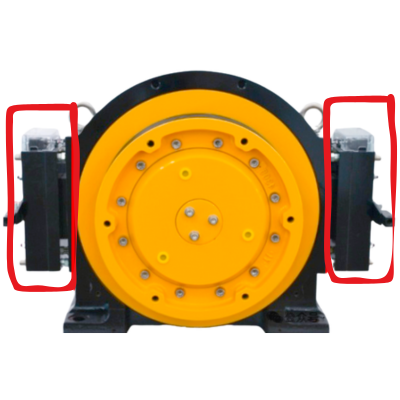
These work like car brakes—two pads clamp down on a disc from both sides.
- Offers strong braking torque, excellent heat dissipation, and stable performance.
- Common in high-speed elevators and large machinery.
- Downside: Higher cost and more complex structure.
Full-Face Disc Brakes
The brake pad presses against one side of the disc.
- Compact and simple design, usually used in low-speed, compact elevator machines.
- Downside: Slightly less efficient in heat dissipation and braking torque compared to caliper types.
3. Drum-Type Brakes
This older design uses brake shoes inside a rotating drum.
- Cheap and simple, but not ideal for elevators anymore.
- Poor dust resistance, and typically can’t meet modern safety requirements like having two independent brake parts.
- Although still seen in some legacy systems, it's gradually being phased out.

Why Brake Selection Matters
Choosing the right elevator brake is critical—not just for compliance, but for safety and performance. A poor-quality or incompatible brake can result in:
- Delayed stops or uncontrolled movement
- Increased wear on traction sheaves and motor bearings
- Inability to meet safety inspection requirements
That’s why it's important to understand brake types and ensure that whatever brake system you use meets industry standards and is appropriate for your elevator type and usage.
Conclusion
Elevator brakes are more than just mechanical parts—they are safety systems. Whether it’s a compact residential elevator or a high-speed commercial lift, having the right brake type installed and maintained properly is non-negotiable.
As suppliers of elevator parts, we at POTENSI understand the importance of reliable brake systems. We offer high-quality elevator components, including brake parts from trusted manufacturers, and can help guide you toward solutions that are safe, compatible, and cost-effective.
How to Identify Wire Rope Slippage?
Mitsubishi elevator common “Freeze” faults analysis
Related Article