Elevator Wire Rope Calculations: A Simple Safety Guide

Doing proper elevator wire rope calculations is the most important step in building a safe lift. These basic math checks prove that your elevator wire rope can hold the heavy cabin without breaking or slipping. This guide makes learning these safety formulas simple and easy to understand.
1. The Safety Factor: How Strong is Strong Enough?
You should never match a rope's strength exactly to the elevator's weight. You need a massive safety cushion. Engineers call this cushion the "Safety Factor" (Sf).
The plain-text formula is very simple: Sf = (n × MBL) / Tmax
Here is what the letters mean in plain English:
- n: How many ropes are you using? (For example, 5 ropes).
- MBL: The breaking strength. This is the exact weight that will snap one elevator steel rope.
- Tmax: The absolute heaviest load the system will ever lift.
When you multiply your ropes by their breaking strength and divide by the heavy load, your answer (Sf) must be 10 or 12. This proves your steel wire rope for elevator use is 12 times stronger than it actually needs to be.
2. Finding the Heaviest Load (Tmax)
To use the formula above, you must figure out the total heavy load (Tmax). This is not just the weight of the passengers.
To get the real number, you must add together:
- The weight of the empty cabin.
- The maximum allowed weight of the passengers.
- The weight of the wire rope for elevator cables themselves.
This last part is important. An elevator steel wire rope is made of heavy metal. In a tall building, the long ropes add a huge amount of weight to the system. You must calculate this so the motor does not get overloaded.
3. Traction and Grip (Preventing Slip)
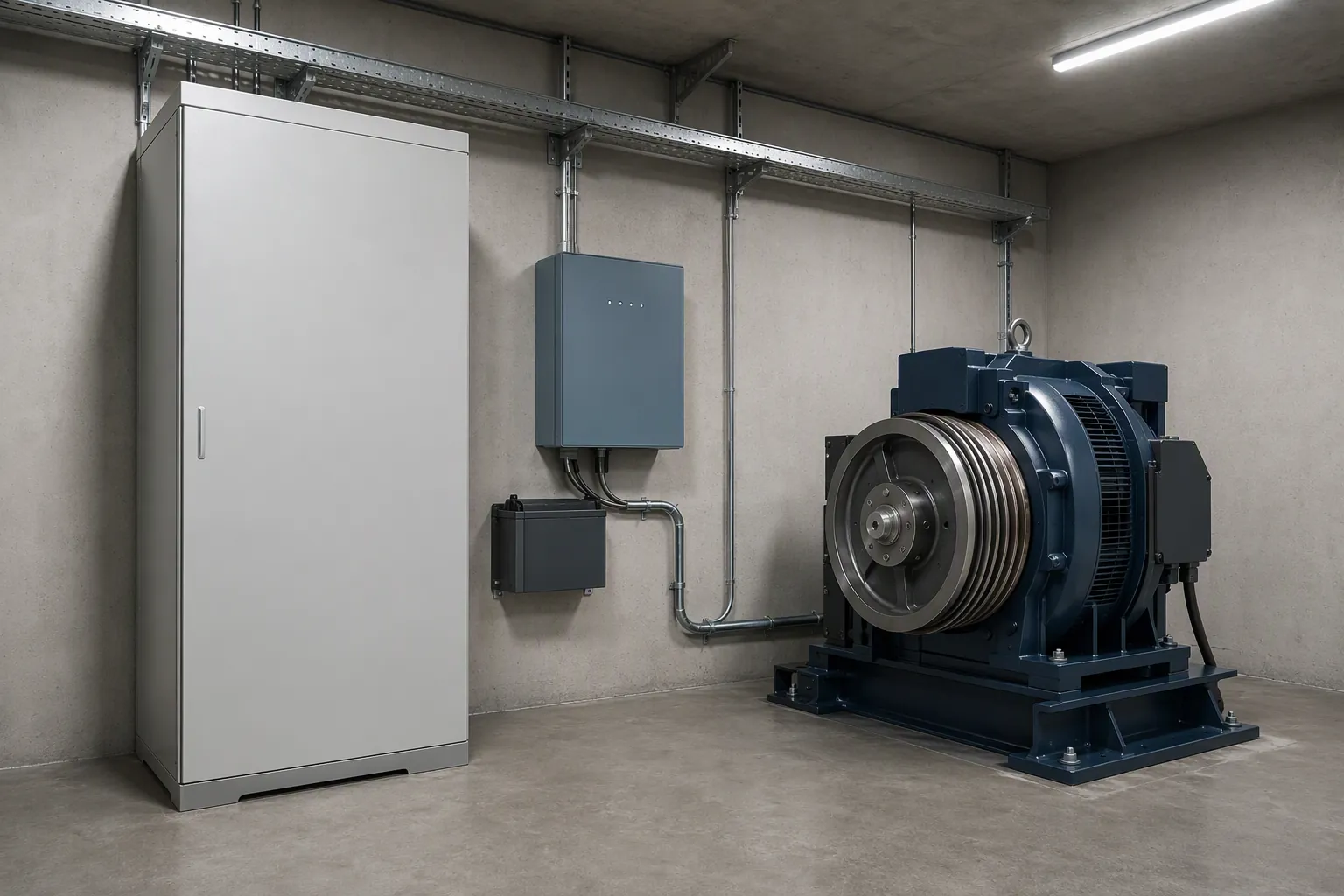
Elevators do not tie the ropes to the motor. The elevator wire ropes simply rest inside the grooves of a metal pulley. Because they just sit there, we must calculate friction to make sure they do not slip.
Engineers use a basic check that looks like this: (T1 / T2) must be less than or equal to the friction grip.
To understand it simply:
- T1 is the heavy side (a full cabin).
- T2 is the lighter side (the counterweight).
- If the difference between the heavy side and light side is too big, the rope will slide.
A good steel wire rope elevator system balances the weights perfectly. This mathematical check guarantees that when the emergency brakes are used, the cabin stops safely without the ropes sliding over the motor.
4. Tread Pressure (Protecting the Metal)
Finally, we calculate "tread pressure." Think of this as how hard the rope pushes down into the metal groove of the motor pulley.
If a wire rope elevator rope pushes down too hard, it will crush its own core and wear out the expensive metal pulley. By calculating this pressure, you can choose the right groove shape (a gentle U-shape or a tighter V-shape). This math check protects every wire rope for elevators from getting damaged too early.
Conclusion
You do not need a math degree to understand basic elevator wire rope calculations. By learning how safety factors, maximum tension, and friction work, you can ensure your lifting system is perfectly balanced. Using the right math guarantees your elevator wire rope will carry passengers safely and last for years without failing.
Essential Elevator Wire Rope Discard Criteria and Replacement Guide
Understanding Elevator Wire Rope Specifications Standards: A Guide for Safety
Related Article


A traction machine does not wind the ropes onto a drum. It grips them.