
Types of Elevator Motors: AC, DC, Gearless & How to Choose the Right One
author: Cloe
2026-06-30
Types of elevator motor define the core structure of every elevator system, including the elevator motor, elevator traction motor, and elevator drive motor used to generate and control lifting power. In modern systems, these components are typically integrated into an elevator traction machine, which can be configured as either a gearless elevator motor system or a geared elevator motor system depending on building requirements.
Understanding the types of elevator motor is essential for selecting, replacing, or maintaining the correct drive system in different elevator applications. This guide explains the main motor types, their structure, and how they are used in modern elevator traction systems.
1. What Is an Elevator Motor?
An elevator motor is the core power unit that drives the elevator movement through a traction system. It converts electrical energy into mechanical motion to lift and lower the elevator car.
In modern systems, the motor is usually integrated into a traction machine (elevator traction motor system), which includes the motor, brake, and sheave.
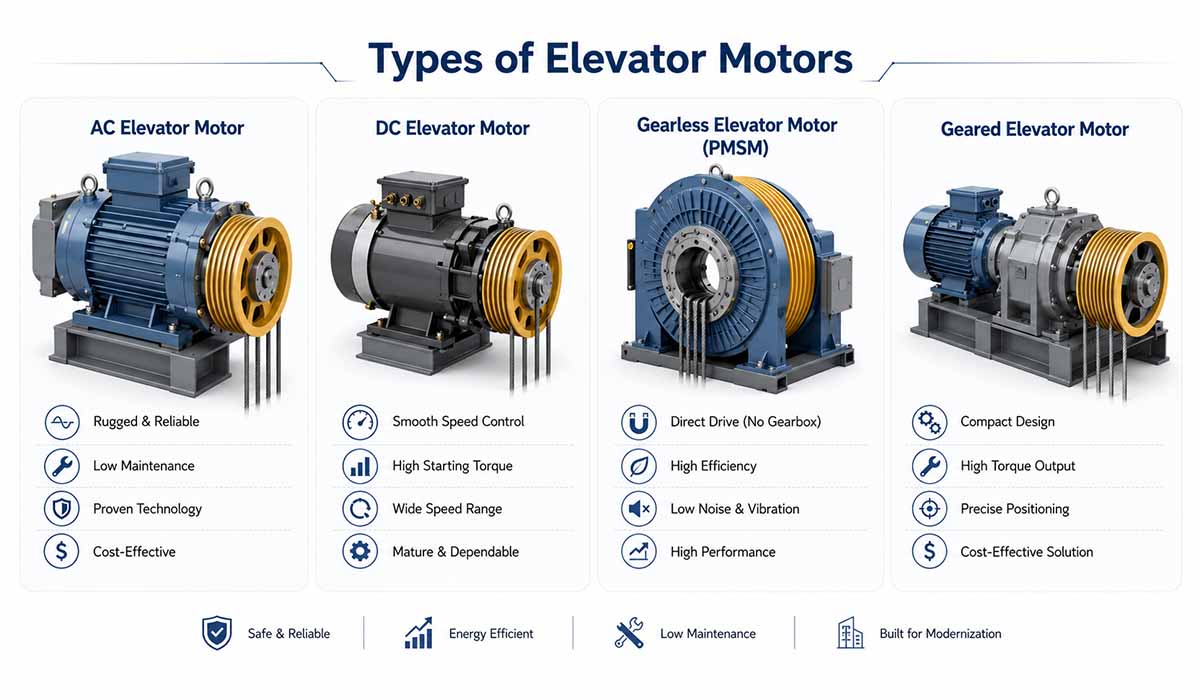
2. Main Types of Elevator Motors
2.1 AC Elevator Motor (Alternating Current Motor)
The AC elevator motor is one of the most widely used motor types in modern elevator systems.
Key features:
-
Simple structure
-
Low maintenance cost
-
High reliability
-
Suitable for residential and commercial buildings
Applications:
-
Low-rise and mid-rise elevators
-
Standard passenger elevators
Most modern AC motors are paired with VVVF drives for smooth speed control.
2.2 DC Elevator Motor (Direct Current Motor)
The DC elevator motor was widely used in older elevator systems.
Key features:
-
High starting torque
-
Precise speed control
-
Complex maintenance requirements
Limitations:
-
Higher maintenance cost
-
Brush wear issues
-
Gradually replaced by AC systems
Today, DC motors are mostly found in legacy elevator systems.
2.3 Gearless Elevator Motor (PMSM Motor)
The gearless elevator motor, also known as a PMSM (Permanent Magnet Synchronous Motor), is the standard solution in modern high-efficiency elevators.
Key features:
-
High energy efficiency
-
Low noise and vibration
-
Compact structure
-
No gearbox required
Applications:
-
High-rise buildings
-
MRL (Machine Room-Less) elevators
-
Premium residential and commercial projects
The gearless design reduces mechanical loss and improves ride comfort significantly.
2.4 Geared Elevator Motor
The geared elevator motor includes a gearbox between the motor and the sheave.
Key features:
-
Lower cost compared to gearless systems
-
Reliable performance
-
Requires regular lubrication and maintenance
Applications:
-
Mid-rise buildings
-
Industrial and freight elevators
Although less efficient than gearless systems, geared motors remain widely used due to cost advantages.
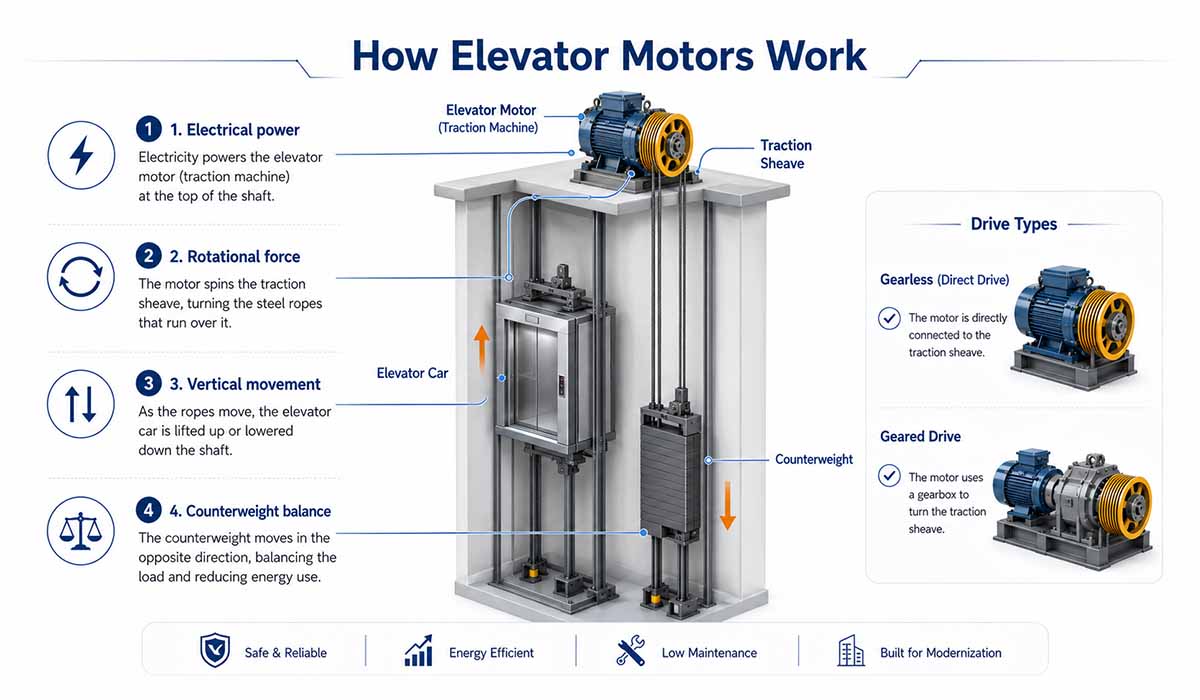
3. Elevator Motor Working Principle
All elevator motors operate on the same basic principle:
-
Electrical power is supplied to the motor
-
The motor generates rotational force
-
The traction system converts rotation into vertical movement
-
Counterweight balances the load for energy efficiency
In gearless systems, the motor directly drives the sheave, improving efficiency.
4. Elevator Motor vs Elevator Traction Motor
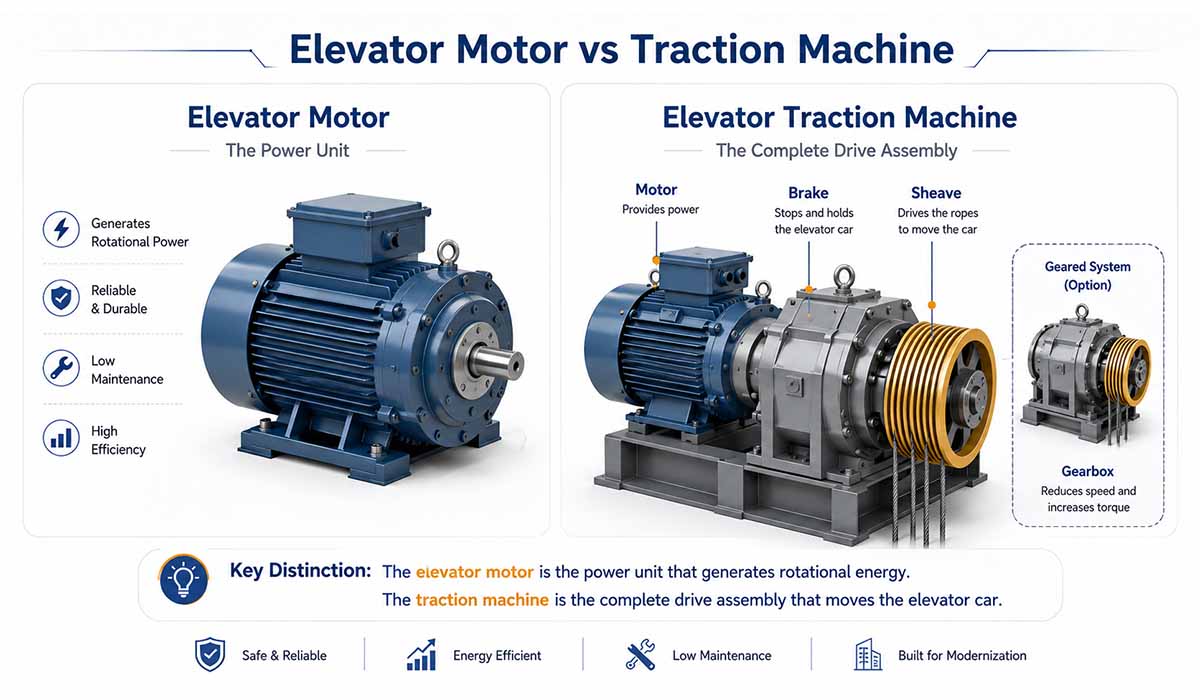
A common confusion in the industry:
-
Elevator motor = the power unit
-
Elevator traction motor / traction machine = complete drive system
The traction machine includes:
-
Motor
-
Brake system
-
Sheave
-
(Gearbox in geared systems)
Understanding this difference is important for correct part selection and replacement.
5. How to Choose the Right Elevator Motor
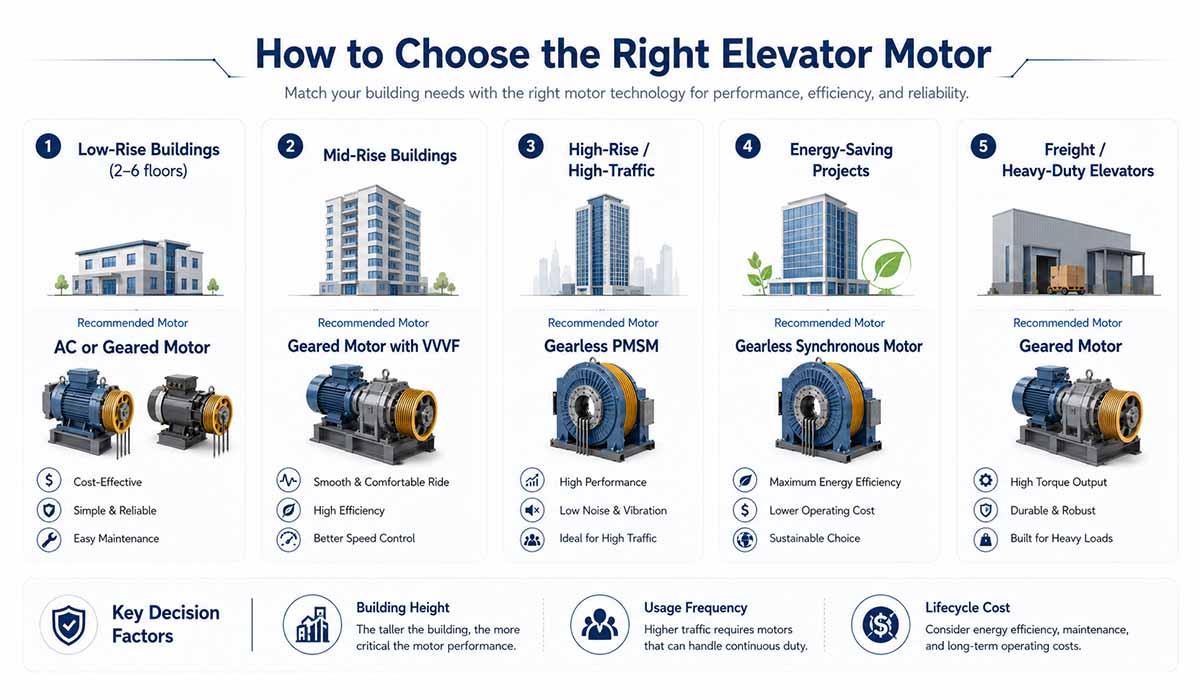
Motor selection depends on building height, usage intensity, and lifecycle cost. In engineering practice, decisions are usually made based on the following rules:
For low-rise buildings (2–6 floors), priority is cost and simplicity. AC motors or geared traction motors are typically sufficient. They provide stable performance at a lower installation and maintenance cost.
For mid-rise buildings, the focus shifts to efficiency and ride quality. Geared motors with VVVF control are commonly used, while upgraded AC systems are also a practical option when smoother operation is required.
For high-rise or high-traffic buildings, gearless PMSM motors are the standard choice. They offer higher efficiency, better torque control, and stable performance under frequent starts and stops. They are also required in most MRL (machine-room-less) elevator systems.
For energy-saving or green building projects, gearless synchronous motors are preferred. The higher initial cost is offset by lower energy consumption and reduced mechanical loss over time.
For freight or heavy-duty elevators, geared motors are still widely used. They deliver higher torque and are easier to maintain in industrial environments, where noise and energy efficiency are less critical than durability.
In summary, the decision is mainly driven by three factors: building height, usage frequency, and lifecycle cost.
6. Common Applications of Elevator Motors
-
Residential elevators
-
Commercial buildings
-
Shopping malls
-
Hospitals
-
Industrial freight systems
Each application requires different motor performance characteristics.
Conclusion
Understanding the types of elevator motors is essential for selecting the right system for performance, efficiency, and long-term reliability.
Modern elevator systems increasingly rely on gearless PMSM motors, while geared and AC motors remain widely used in cost-sensitive applications.
If you need help selecting the right elevator motor, contact us for technical support and quotation.
An Engineering Guide to Selecting Wire Rope Sizes for Elevator Systems
How to Choose Elevator Button? 丨Potensi Elevator
Related Article
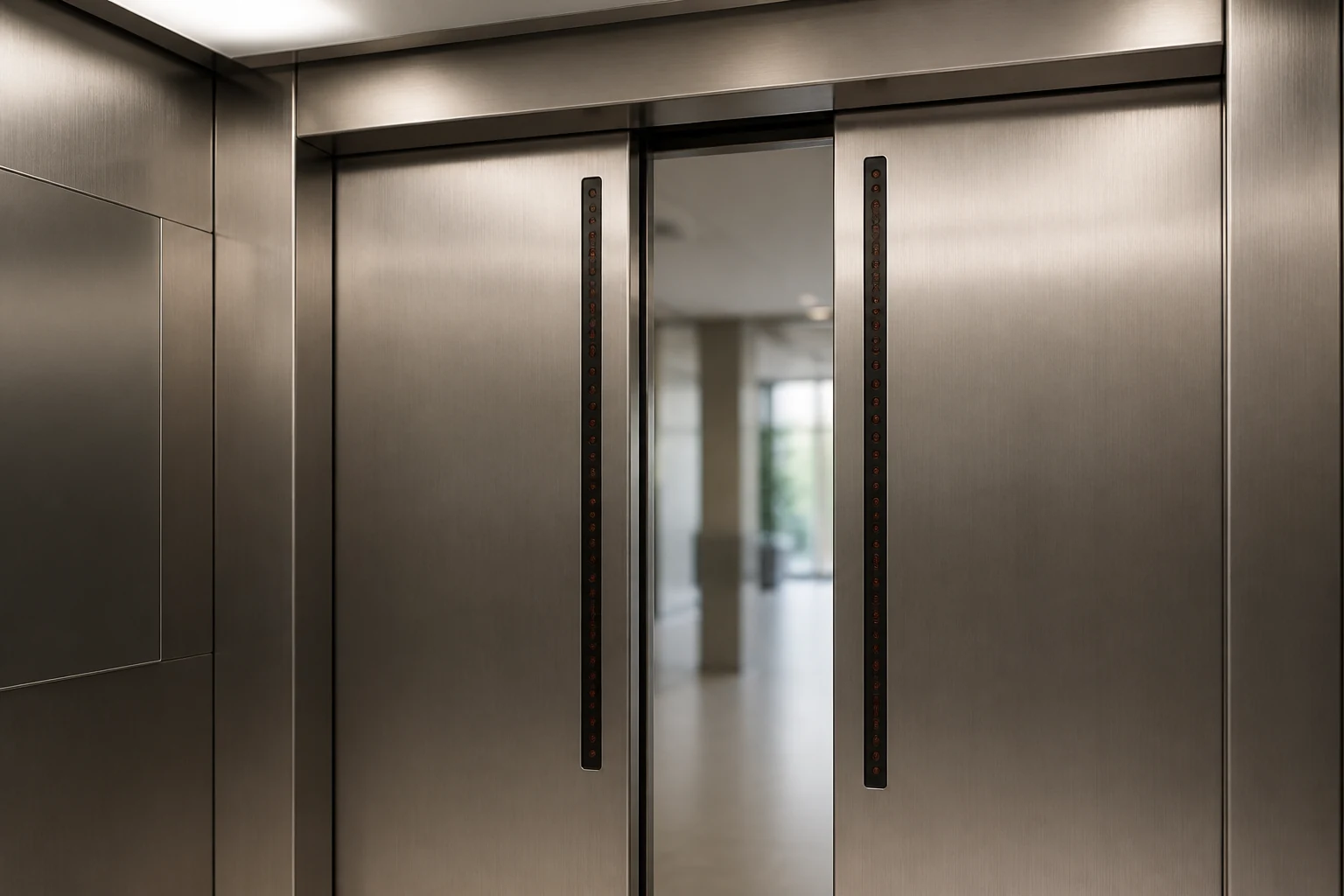
Yes, most lift doors have a sensor — but not all, and not the same type. How to tell what your door has in three checks, and what the sensor still cannot cover.
Do Elevator Doors Have Sensors? The Straight Answer
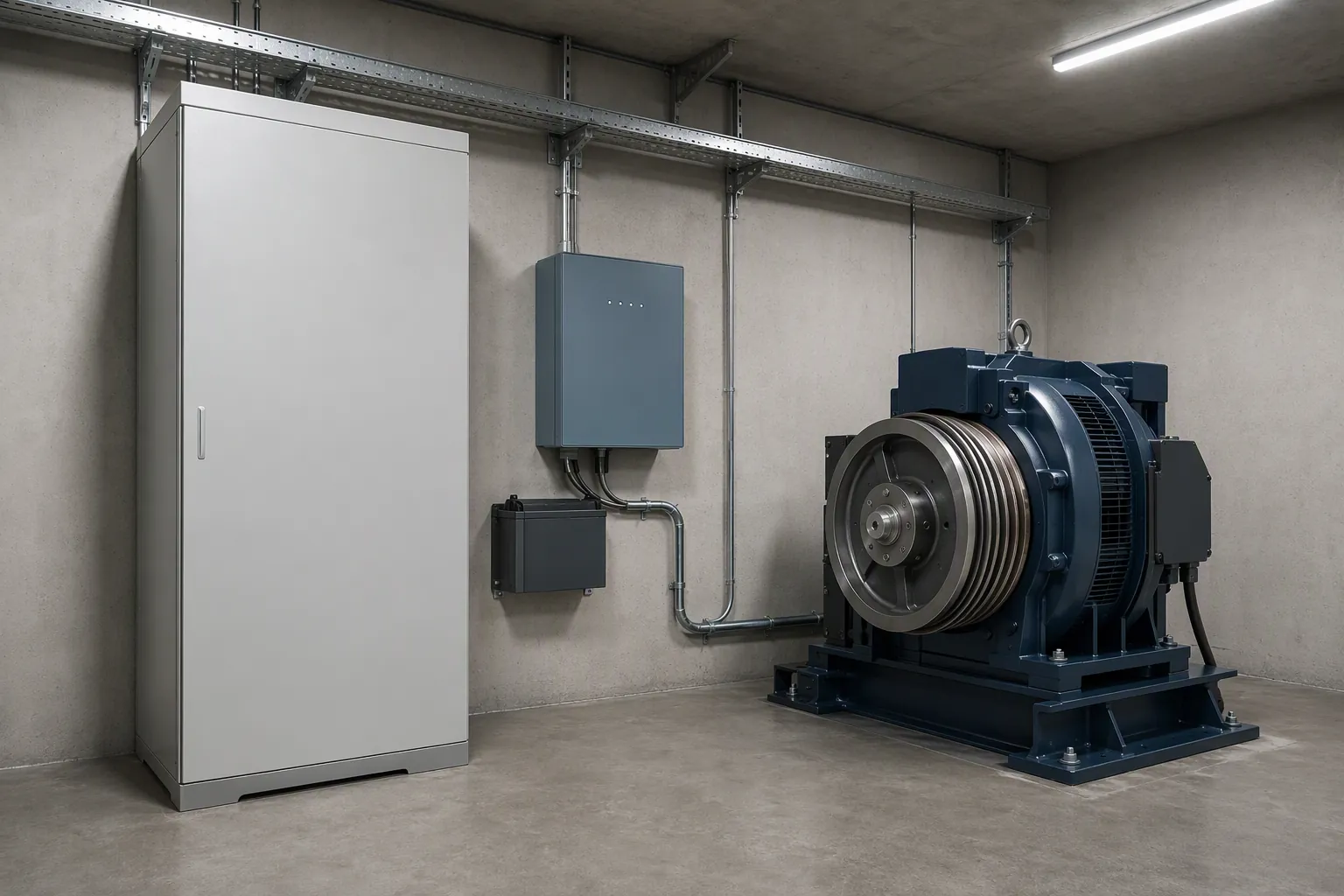
What an elevator ARD is, how the automatic rescue device works, what 220V and 380V models mean, how to size one for your lift, and what drives the price.
Elevator ARD: Automatic Rescue Device Guide & Specs
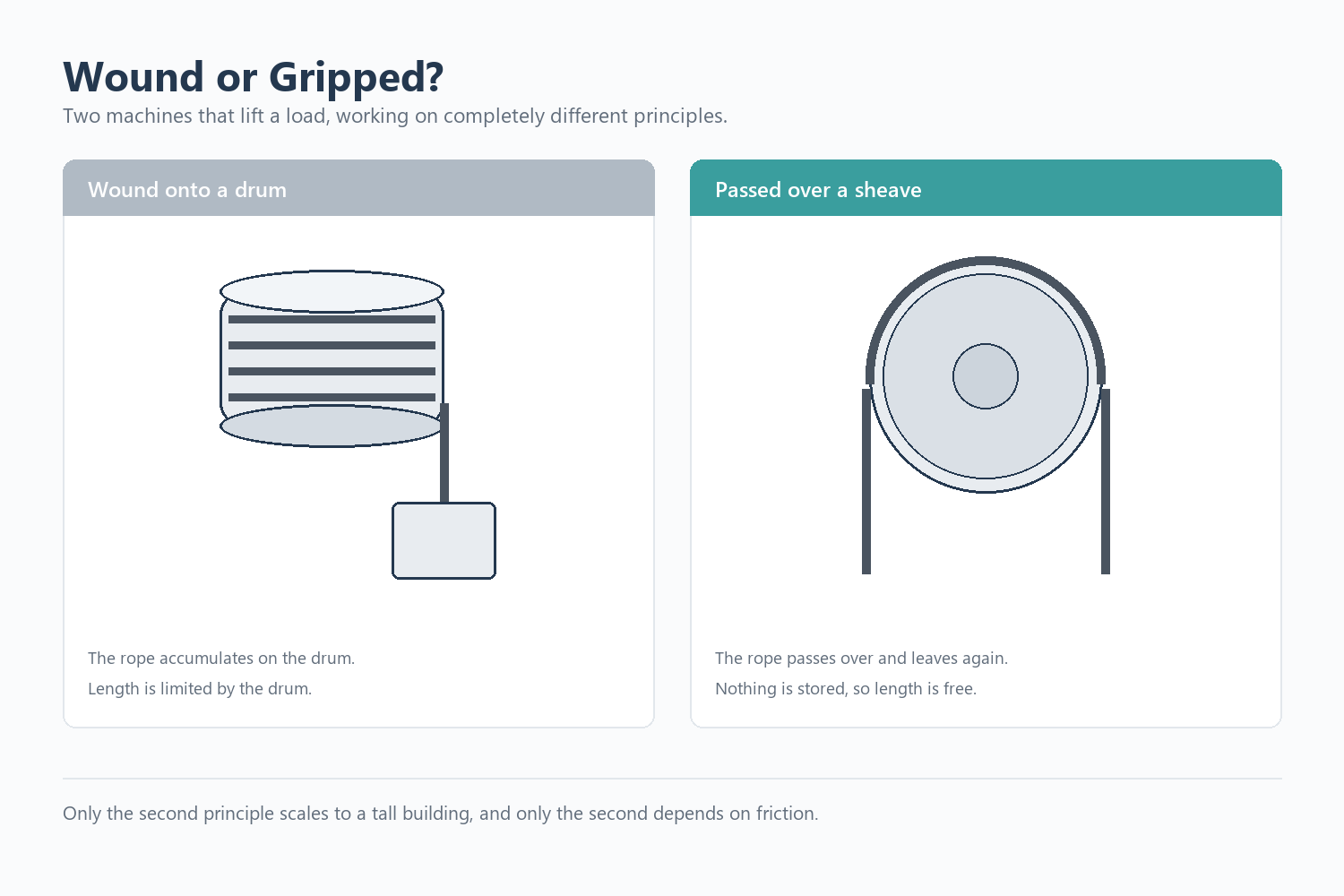
Most explanations of how an elevator traction machine works say the same thing: the motor turns a wheel, the wheel moves the ropes, the car goes up. That is true, but it skips the part that actually explains the machine.
A traction machine does not wind the ropes onto a drum. It grips them.
A traction machine does not wind the ropes onto a drum. It grips them.
How an Elevator Traction Machine Works
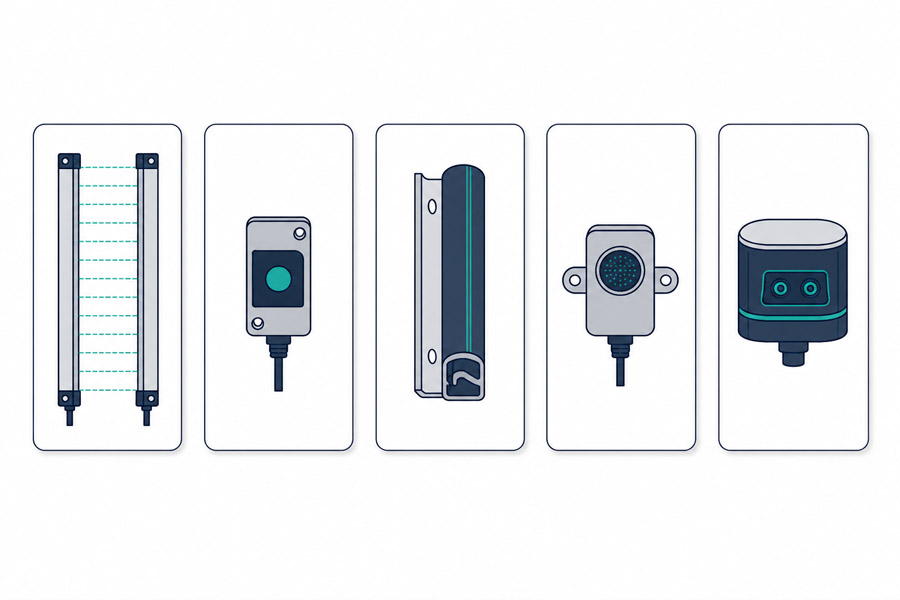
Elevator door sensor types fall into five groups: infrared light curtains, photo eyes, mechanical safety edges, ultrasonic sensors, and 3D sensors. This guide covers each type, how to identify the one you already have, and which to choose.
Elevator Door Sensor Types: How to Identify and Choose