Elevator Limit Switch: Function, Types, Cam Setting and Price
A car with a correctly set elevator limit switch stops where the drawing says it should. A car with a tired one runs into the buffer and stays there until someone with a key comes. This guide separates the three switches that share the name, gives the settings the codes actually require, and covers what a replacement has to match.
What a Limit Switch Does in an Elevator
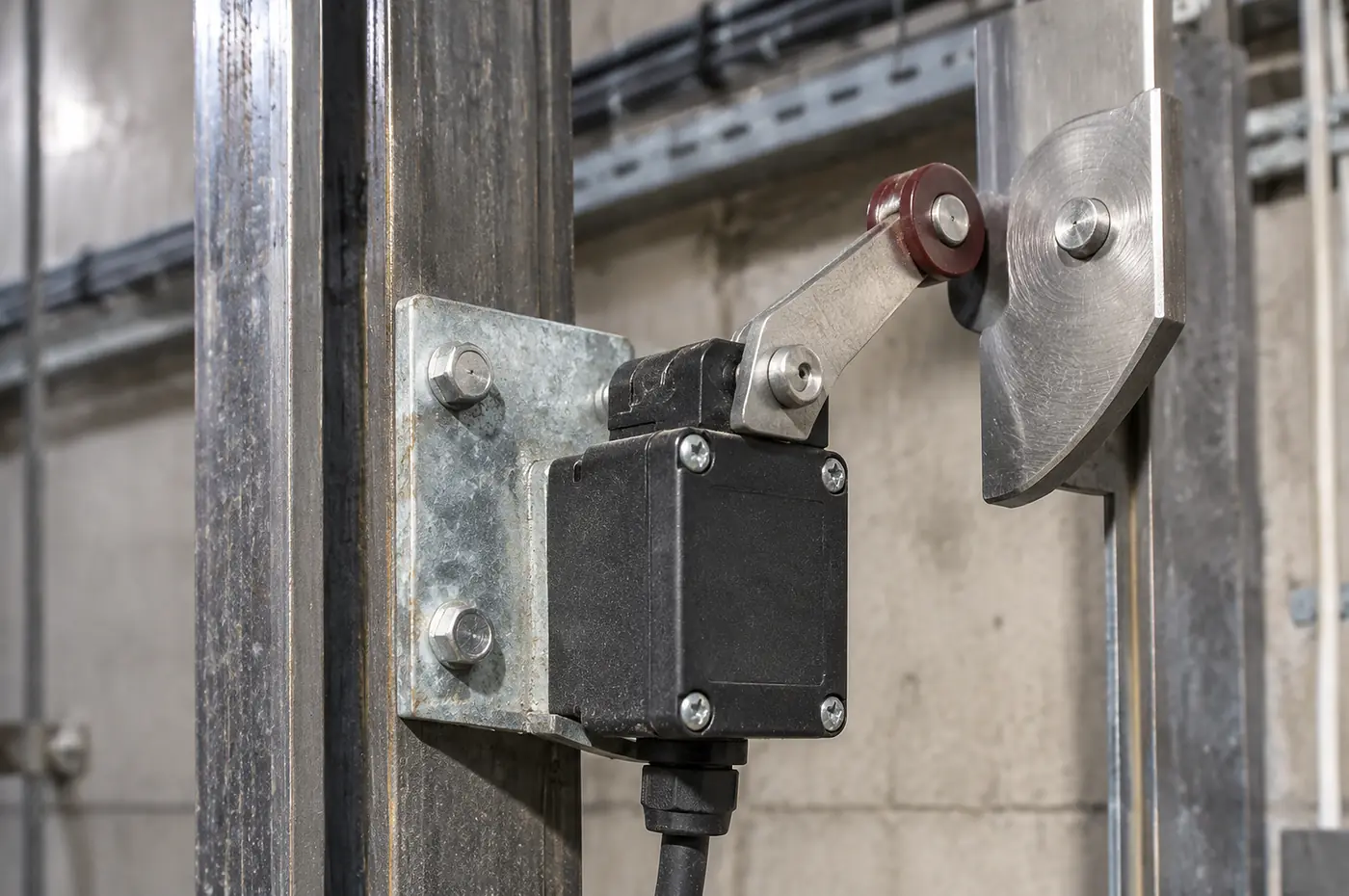
The elevator limit switch function is narrow on purpose. It proves a position, and the proof has to be physical.
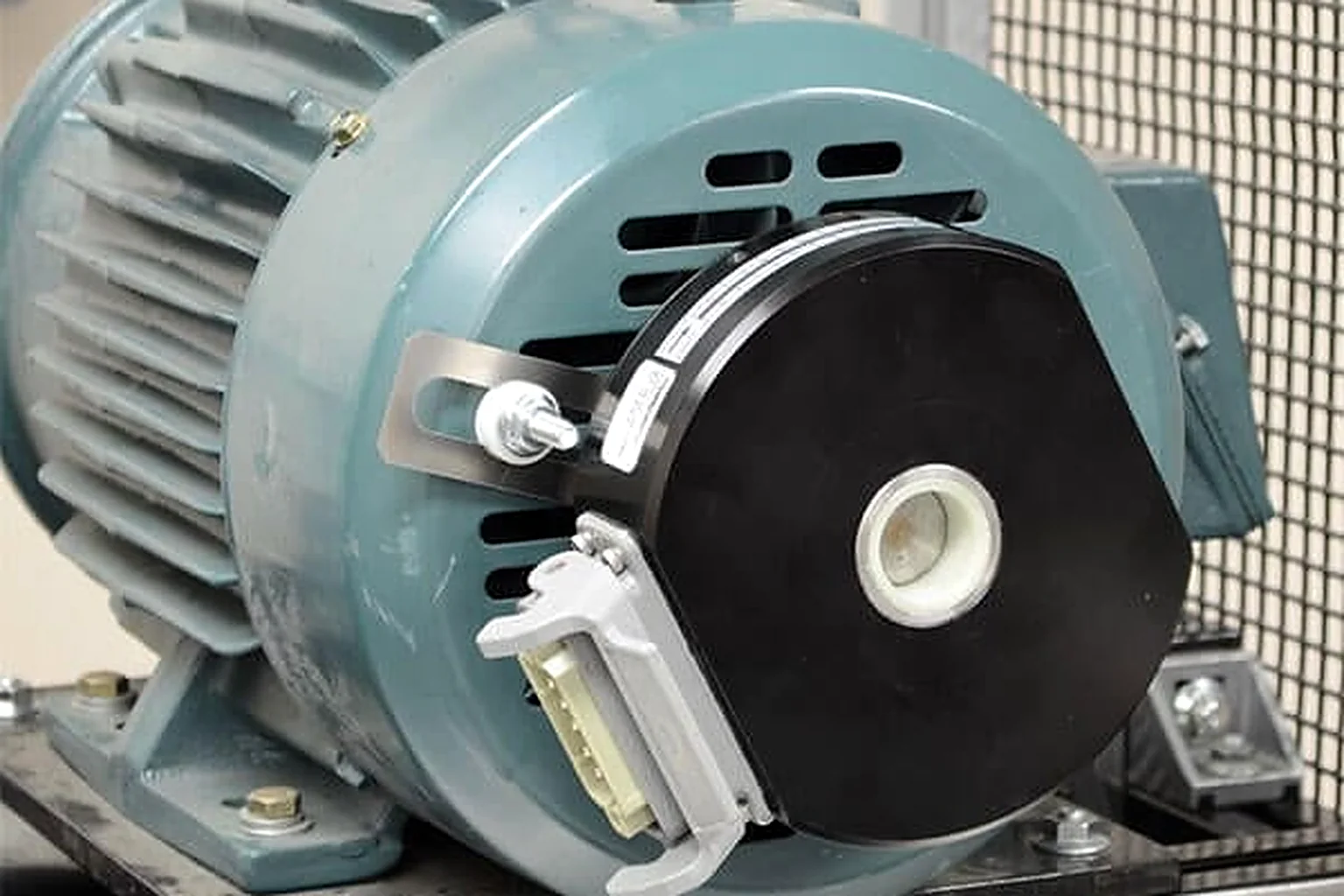
An encoder counts pulses and tells the controller where the car should be. An elevator limit switch tells the controller where the car is, and it does so with no software in the middle. That is the whole reason it survives in machines that already know their position to the millimetre.
A limit switch for elevator work sits in the safety chain, not in the motion loop. When it opens, the drive loses its permissive. Nothing recalculates, nothing re-levels, and the car does not finish the run.
The shortest answer to what is limit switch in elevator systems is this: three jobs, and each one fails differently.
|
Job |
What it protects |
If it fails |
|---|---|---|
|
Slow the car near a terminal |
The landing, the ride quality |
Car arrives fast and stops hard |
|
Cut power past the terminal |
Buffers, ropes, machine |
Buffer takes the hit |
|
Prove a door is locked |
Anyone standing at the landing |
Car moves with a door unlocked |
The Three Switches That Get Mixed Up
Most calls about elevator limit switches start with the wrong one named. The three below are separate devices with separate jobs, and in a modern installation they are not even on the same bracket.
|
Normal terminal switch |
Final limit switch |
Door switch |
|
|---|---|---|---|
|
Job |
Slow down and stop at the landing |
Remove power past the landing |
Prove the door is closed and locked |
|
Acts |
Every trip |
Only after the normal device fails |
Every door cycle |
|
Driving part |
Cam on the car or the rail |
Its own cam, never shared |
Lock arm or door vane |
|
After it acts |
Car carries on normally |
Car will not answer calls |
Car will not start |
|
Reset |
Automatic |
Maintenance intervention |
Automatic when the door closes |
The distinction that matters on site: a normal terminal switch that drifts produces a hard stop at the top floor. A final limit switch that trips produces a dead car. The first is a ride complaint, and the second is the kind of elevator limit switch fault that empties a building for an afternoon.
Where Each One Sits in the Hoistway
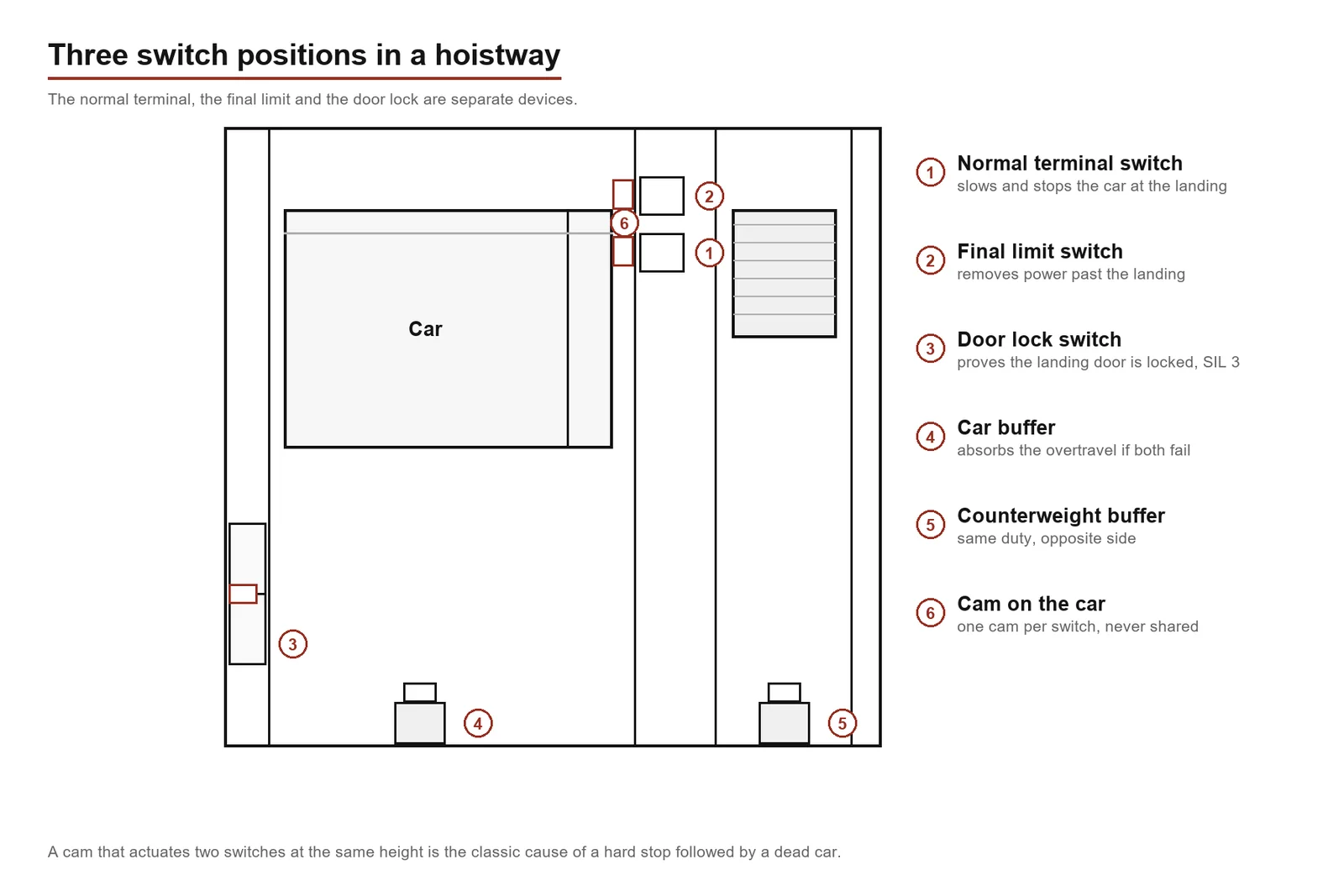
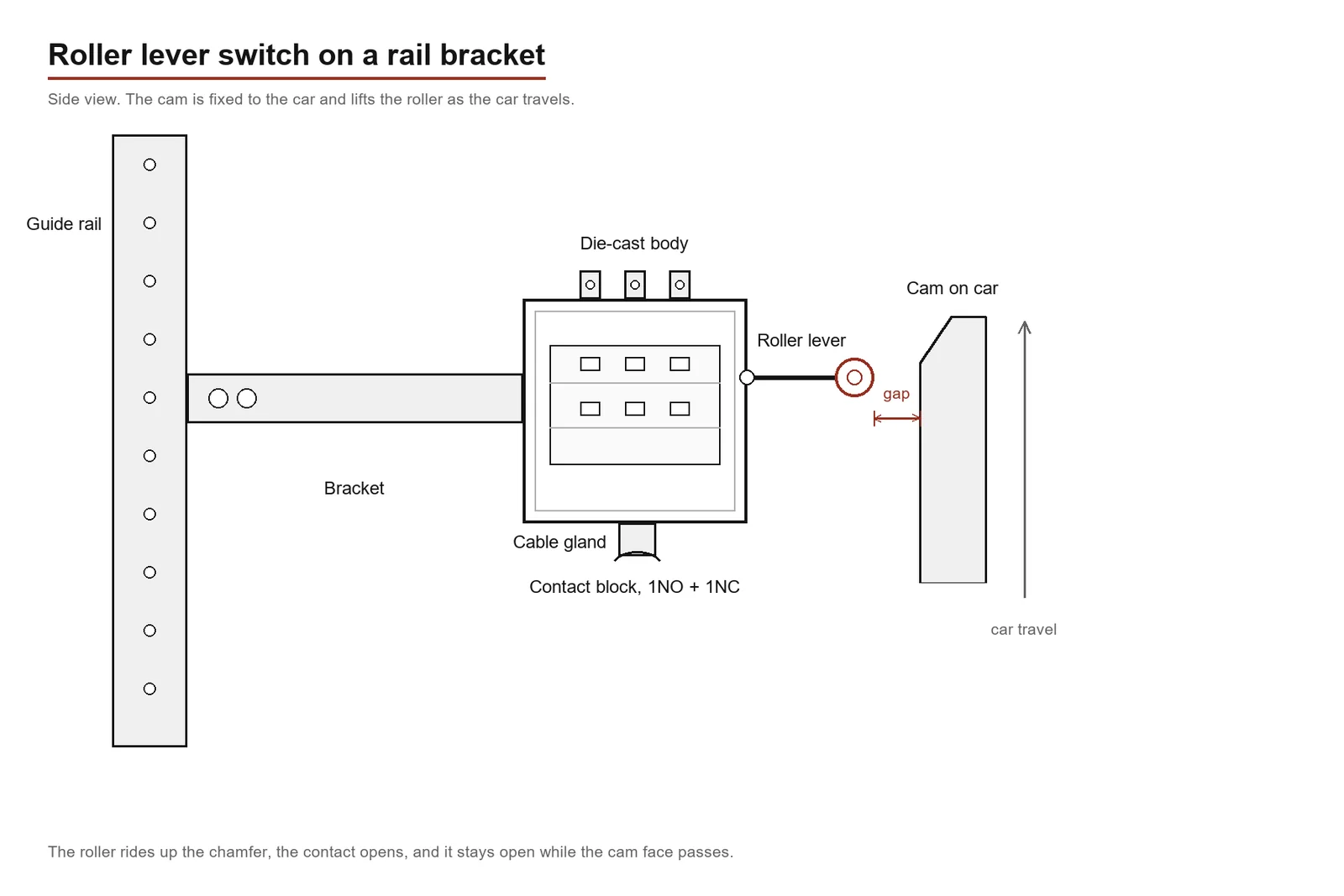
Elevator hoistway limit switches are mounted on a bracket fixed to a guide rail, and they are actuated by cams that travel with the car, the counterweight or the rope. The bracket position is set at installation and rarely moves. The cam is the part that moves, wears and comes loose.
Every elevator limit switch in this list works the same way: a fixed body on a bracket, a moving cam, and a gap between them that decides when the contact changes. The usual arrangement in a traction lift:
-
Two normal terminal switches, one near each terminal landing, at car or counterweight level.
-
Two final limit switches, further out, beyond the normal ones.
-
Door switches at every landing, in the lock, plus the car door contact.
The pit is the place to check first. Water, dust and dropped tools collect there, and a switch that sits in 20 mm of water will read closed when it is open.
What the Codes Require of a Final Limit Switch
This is where most guides stop at "it prevents overtravel". The elevator final limit switch has specific, checkable requirements, and they differ between Europe and the United States. The elevator limit switch at each end of travel is the device those clauses describe, so the wording below is worth reading with a tape measure in hand.
EN 81-20:2014, clause 5.12.2:
-
One switch at the top and one at the bottom on traction and positive-drive lifts. Hydraulic lifts need the top one only.
-
Set as close to the terminal floor as possible without risk of accidental operation.
-
It must operate before the car or counterweight touches the buffer, and stay actuated while the buffer is compressed.
-
Separate actuating devices for normal terminal stopping and for the final limit switch. One cam cannot do both jobs.
-
It opens by positive mechanical separation of the motor and brake circuits, or through an electric safety device to 5.11.2, rated SIL 1.
-
After it operates, the car no longer answers car or landing calls, and returning the lift to service needs a competent maintenance person.
The US code, as written into California Title 8 §3039, adds numbers that are easier to check with a tape:
-
Contacts must be opened directly by mechanical action. A spring or gravity arrangement is not accepted.
-
The device must stop movement in both directions, not only the direction that tripped it.
-
On older plant covered by the exception in that clause, installed before 17 April 1970 with car-mounted final switches, oil buffers set the number: the device must act before the car buffer is compressed more than two thirds of its stroke, or the counterweight buffer more than one third.
-
Where emergency terminal stopping is required by the authority having jurisdiction, retardation may not exceed 32.2 ft/s², which is one g.
An elevator terminal limit switch and a final limit switch are the same device under two names. The elevator terminal limit switch label is common on older drawings and on imported equipment.
Door Switches Are Not Limit Switches
An elevator door limit switch is called that on site, and it is the one place where the name causes real trouble. In the codes it is not a limit switch. It is an electric safety device proving that a landing door is closed and locked.
Calling it an elevator limit switch puts it in the wrong chapter of the code, and the wrong chapter carries a lower integrity level.
EN 81-20 §5.3.9.1.1 is explicit. The locking of a landing door must be proved by an electric safety device conforming to 5.11.2, and the lock must be effective before the car moves. §5.3.9.1.13 requires a data plate on the locking device, showing the manufacturer, the type-examination certificate number and the type. The integrity level for the locked position check is SIL 3, not SIL 1.
Three different functions hide under the phrase limit switches for elevator doors:
|
Function |
What it proves |
Typical failure |
|---|---|---|
|
Lock contact |
Door closed and locked, car may move |
Car refuses to start, door shows closed |
|
Door zone switch |
Car is level with a landing, doors may open |
Doors open at the wrong floor |
|
Close limit in the operator |
Door has reached the closed position |
Door re-opens at the end of the cycle |
A lock contact that sticks closed is the dangerous one, because the controller then believes a door is locked when it is not. A zone switch that drifts is the annoying one, because the car stops 40 mm out and levels twice.
The Cam Is Half the Switch
A limit switch cam for elevators is a steel ramp bolted to a guide rail or to the car. Its length sets how long the contact stays actuated. Its angle sets how fast the roller lifts. The elevator limit switch only reports what the cam gives it, which is why a cam problem looks like a switch problem.
Three rules decide whether a cam works:
-
One cam per function. EN 81-20 §5.12.2.2.1 forbids sharing an actuating device between normal terminal stopping and the final limit switch. A machine that stops and then dies in the same place has a shared cam.
-
Length covers the whole buffer stroke. The contact has to stay open while the buffer compresses, not just at the moment of contact.
-
Nothing carries the load but the rail. A cam held by two bolts into a thin bracket flexes, and a flexing cam produces the classic once-a-week hard stop. No elevator limit switch can correct that.
Cam wear shows as a polished face and a rounded leading edge. A rounded edge lifts the roller slowly, the contact makes and breaks, and the controller logs a phantom signal that never repeats. A cam that has come loose turns a reliable elevator limit switch into a weekly call-out.
How to Specify a Replacement
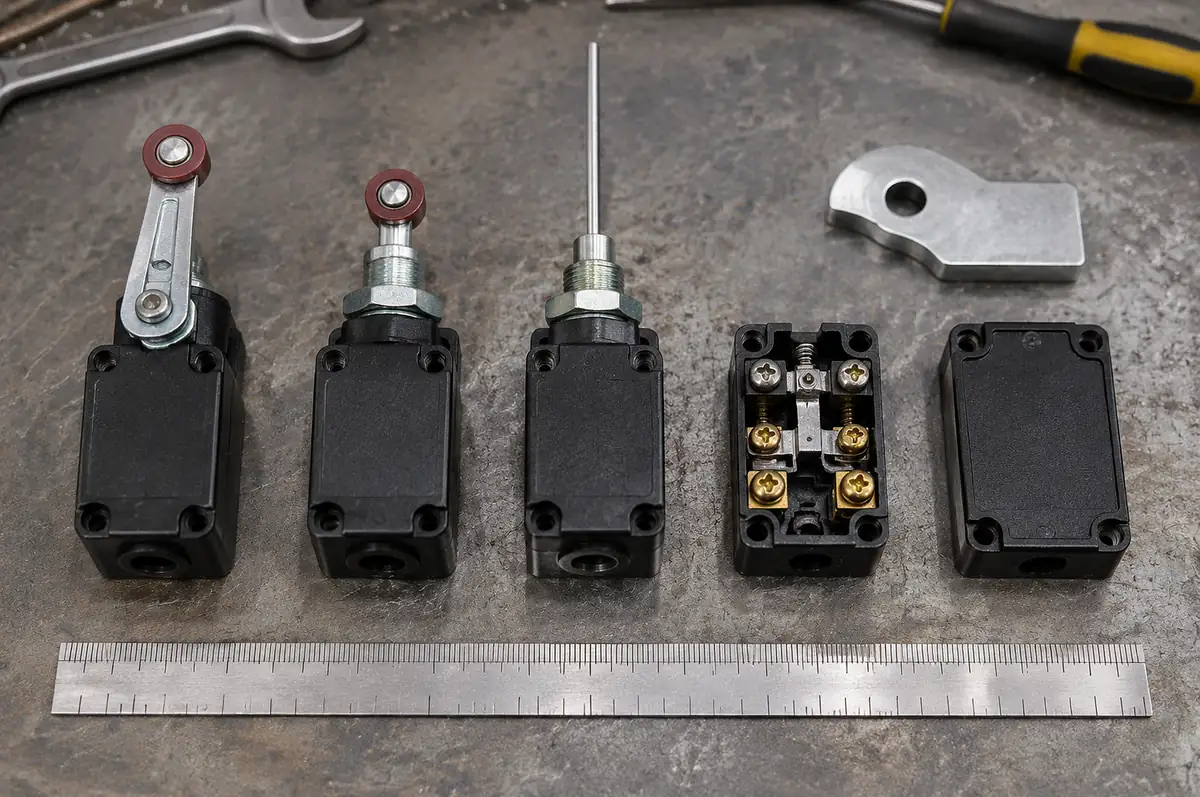
Five parameters settle almost every elevator limit switch order. Photograph the old switch with a ruler in frame and send these with it:
|
Parameter |
What to send |
Why it matters |
|---|---|---|
|
Contact arrangement |
1NO+1NC, 2NC, or the wiring diagram |
Wrong logic means the safety chain reads inverted |
|
Actuator |
Roller lever, roller plunger, rod, or whisker |
Determines reach to the cam, not just fit |
|
Housing and IP rating |
IP65 or IP67, metal or plastic |
Pit and shaft conditions decide life |
|
Electrical rating |
Voltage and current of the circuit |
A 10 A switch on a 2 A circuit is fine; the reverse welds the contacts |
|
Reset |
Automatic or manual |
Manual reset is required where the code asks for maintenance intervention |
Two phrases appear on supplier lists and mean different things. An elevator duty limit switch is rated for the switching frequency of a lift, which runs far more cycles than a machine guard. A switch sold as an elevator limit switch industrial is built to a heavier housing standard, usually die-cast, for pits with water and for goods lifts.
The model numbers matter more than the description. A Mitsubishi 1370 and 1371 look alike and are not interchangeable. The Wittur KF-9074 and KF-9075 pair is sold as a set for a reason. A Hitachi SND4111 and an LX-22 come from the same maker and still take different brackets. A Siemens 3SE3 100-1E is a machine-tool switch that found its way into lift work and needs the right actuator to match a lift cam.
A final limit switch elevator order usually starts with a photo of the body, because the body shape decides the mounting holes before anything else is checked.
Every elevator parts limit switch we ship is checked against the rail section and the cam height. A switch that bolts on and misses the cam is a returned parcel.
Symptom to Switch
Match the symptom to the elevator limit switch before ordering a part. Most wrong orders start with a guess about which switch opened.
|
What the building reports |
Most likely device |
Measure first |
|---|---|---|
|
Hard stop at top or bottom floor |
Normal terminal switch or its cam |
Cam position and roller gap |
|
Car dead after a run past the floor |
Final limit switch |
Which switch opened, then the cam length |
|
Car will not start, doors shown closed |
Lock contact |
Contact resistance with the door shut |
|
Doors open 30 to 50 mm off level |
Door zone switch |
Switch position against the floor line |
|
Intermittent stop, no pattern |
Loose cam or worn roller |
Bolt torque, roller face |
|
Stops at a different floor each time |
Encoder or flat cable, not a switch |
Check the switch signals before replacing |
The last row saves the most money. An elevator limit switch that fires at random floors is usually reporting a real position error from the encoder, and replacing it changes nothing.
What Sets the Price
The elevator limit switch price is driven by five things, and none of them is the plastic.
-
Contact rating. A 10 A AC-15 contact block costs more than a 2 A signal contact, and goods lifts need the former.
-
Housing. Die-cast with an IP67 gasket costs several times a moulded plastic body.
-
Certification. A switch carrying a type-examination certificate for lift use costs more than a generic industrial switch.
-
Reset type. Manual reset adds a mechanism and a lever.
-
Volume. Ten pieces is a sample order; a thousand is a production order, and the price moves accordingly.
That is why a quote for "a limit switch" cannot be compared with another one. An elevator limit switch quote that lists only a price tells you nothing about which contact block sits inside it. Quality elevator limit switch buyers ask for the contact arrangement, the IP rating and the certificate before they ask for the number. For elevator limit switch quotes that hold, send the model number and the quantity in the same message.
Sourcing From China and Taiwan
A China elevator limit switch order and an order from a European distributor can carry the same switch. The difference is the traceability behind it, and that is what to check.
What a competent elevator limit switch manufacturer provides without being asked:
-
The model number cross-referenced to the lift brand it fits.
-
The contact arrangement and the electrical rating on the datasheet, not on a chat message.
-
A certificate reference, and a sample with the marking on the body.
-
A packing list that matches the carton count.
Taiwan supplies switch bodies as well, and for many buyers the phrase elevator limit switch taiwan simply means a second source, not a different product. The same test applies: what is on the certificate matters more than the country on the label.
Where the phrase China limit switch elevator still reflects reality is the range. A lift made by Otis, KONE, TKE, Mitsubishi, Hitachi, Toshiba, Hyundai, Fuji, Wittur or Monarch uses a switch with a specific body and lever. A supplier that stocks all of them saves the buyer a second order. That is a limit switch elevator buyers come back for: one carton, several brands, matching cams.
We hold these in the Elevator Switch & Sensor range, alongside the Mitsubishi, Hitachi and Wittur brand pages they belong to. POTENSI has built and supplied lift parts for 17 years, with a multi-brand catalogue of more than 200,000 items shipped to 43 countries.
FAQ
What does a limit switch do on an elevator?
It proves the car has reached a set position and changes the safety circuit accordingly. Near a terminal it slows or stops the car. Past the terminal it removes power so the buffer absorbs the overshoot instead of the building.
Where is the final limit switch located?
An elevator limit switch in the final position sits in the hoistway, on a bracket fixed to a guide rail, beyond the normal terminal switch. It is actuated by its own cam, which must be separate from the cam that drives normal terminal stopping.
Can a limit switch be bypassed to move the car?
Only under a written maintenance procedure, by a competent person, with the pit and the shaft checked first. A bypassed final limit switch removes the last mechanical protection the lift has above the buffer.
How often should limit switches be checked?
At every periodic examination, and after any rope change. Rope stretch moves the car relative to its cams, so a switch that was set correctly two years ago can be actuating late today.
Why does the lift stop at a different floor each time?
Random floors point to position feedback, not to a switch. Read the fault log and compare the switch signals with the encoder count before ordering a replacement.
Do all elevator brands use the same switch?
No. Body shape, lever length and cam height are brand-specific, and even within one brand similar model numbers are not always interchangeable.
The Short Version
An elevator limit switch proves position with a mechanical contact, and it sits in the safety chain rather than the motion loop. Three devices share the name: normal terminal, final limit and door. The final limit switch must act before the buffer touches, stay actuated through the stroke, and use its own cam. Door switches are electric safety devices under a different clause, with a different integrity level. Order by model number, contact arrangement, actuator, IP rating and reset type, and the parcel arrives right the first time.
What Does an Elevator Encoder Do?
Related Article
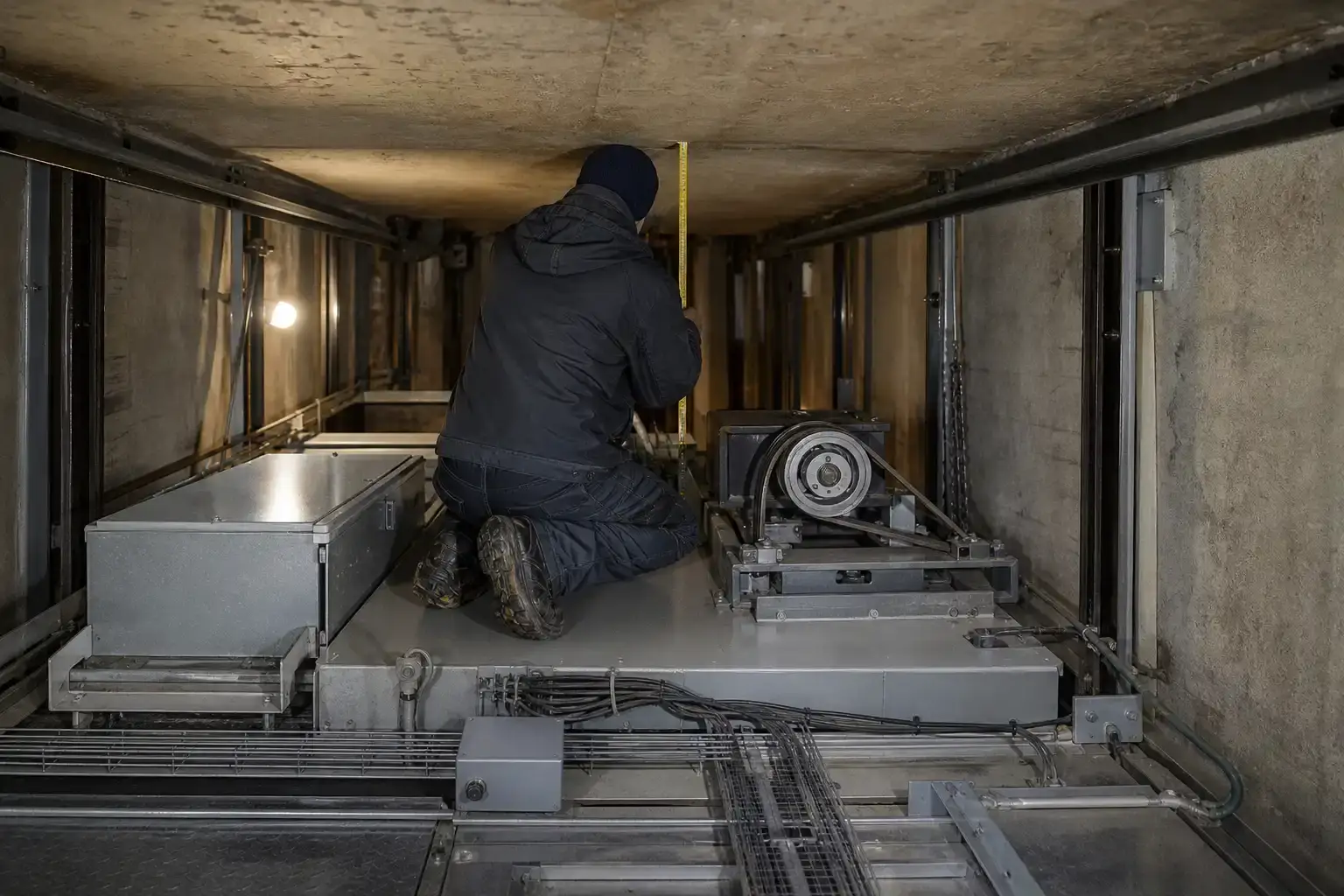
Check all five before you order anything. None of them can be answered from a catalogue. Every one is a measurement on your car top.