What Makes Elevators Work? Inside the 8 Key Systems
When moving people and goods safely in buildings, elevators rely on more than just a motor and cables. They’re composed of eight interconnected elevator system groups, each with its own job. Whether you’re a building owner, facility manager, or maintenance professional, understanding these systems helps you spot issues early, plan upgrades wisely, and ensure a smooth ride for everyone. We’ll walk through each system—what it includes, how it works, and why it matters to you.
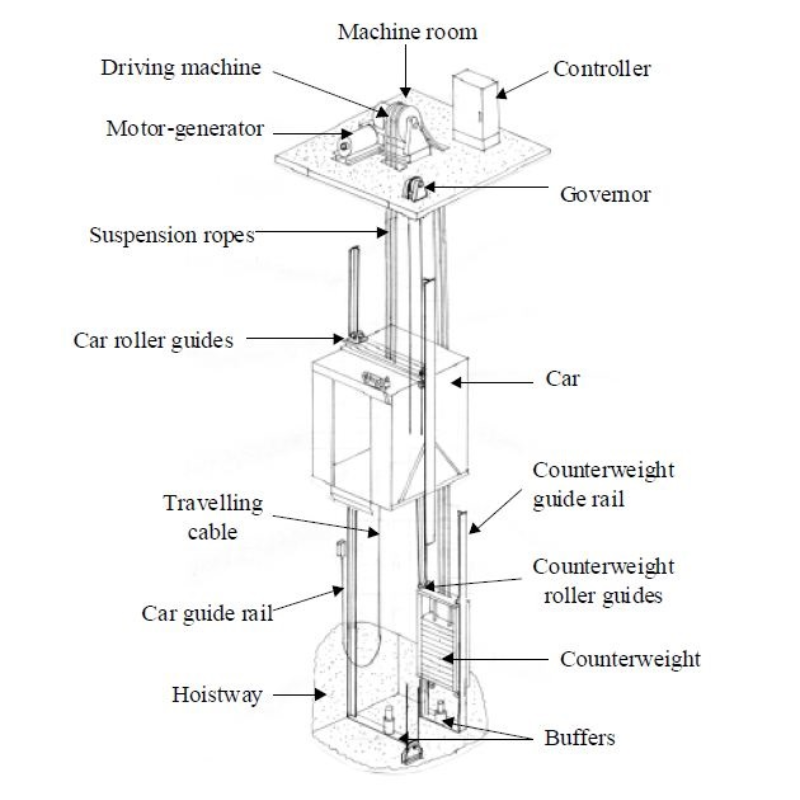
1. Traction System
Components:
- Electric Motor: The heart of the system.
- Traction Sheave: A grooved wheel that ropes wrap around.
- Suspension Ropes: Steel cables that lift the car.
- Brake Assembly: Holds the car in place when stopped.
What It Does:
The motor turns the traction sheave. As the sheave spins, the steel ropes move, raising or lowering the car. The brake locks the sheave to keep the car still at each landing.
Why It Matters:
- Smooth Rides: Worn ropes or a grooved sheave can cause jerky starts and stops.
- Safety: A strong, reliable brake prevents unintended movement.

2. Safety & Protection System
Components:
- Overspeed Governor: A mechanical speed sensor.
- Safety Gear: Clamps the car to the guide rails if it’s too fast.
- Buffers: Hydraulic or spring devices at the shaft bottom.
- Emergency Power Supply: Batteries or UPS to run lights and alarms.
What It Does:
If the car runs too fast, the governor trips the safety gear, clamping the car to the rails. Buffers cushion any impact at the pit floor. In a power cut, emergency power keeps the lights on and lets riders call for help.
Why It Matters:
- Life-Saving: These systems prevent uncontrolled falls and keep people safe if something goes wrong.
- Regulations: Regular testing of governors and buffers is required by safety codes.
3. Control System
Components:
- Main Controller: A small computer that runs the elevator.
- Call Stations: Buttons inside and outside the car.
- Position Sensors: Track the car’s location in the shaft.
- Display Lanterns: Show floor numbers and direction of travel.
What It Does:
The controller takes button presses, checks where the car is, and decides which car goes to which call. In buildings with multiple elevators, it balances cars to reduce wait times. It also handles leveling, making sure you step in and out on a flat floor.
Why It Matters:
- Efficiency: Smart dispatch logic cuts wait times and energy use.
- Comfort: Accurate leveling prevents tripping hazards.

4. Door Operation System
Components:
- Door Operator Motor: Powers door movement.
- Drive Belt or Gear Train: Transfers motor power to doors.
- Sensors: Light curtains, infrared beams, or pressure edges.
- Door Panels & Tracks: The moving walls you step through.
What It Does:
The motor opens and closes the cabin and landing doors. Sensors detect people or objects in the doorway, stopping or reversing the doors to avoid accidents.
Why It Matters:
- Safety First: Faulty sensors can trap limbs or cause doors to slam shut.
- Energy Efficiency: Well-tuned doors reduce drafts and save on air conditioning.

5. Compensation System
Components:
- Compensating Ropes or Chains: Heavy-duty cables or chains.
- Pit Sheave: A small wheel in the elevator pit.
- Tension Weights: Keep the compensating line under the right tension.
What It Does:
As the car moves, the length of its electrical cables and control wires changes. The compensation system counterbalances that change by adding weight on the opposite side, keeping tension constant and preventing jerks.
Why It Matters:
- Smooth Operation: No sudden jolts when cables pull.
- Reduced Wear: Balanced loads put less stress on ropes and motors.

6. Car Cabin & Interior System
Components:
- Cabin Framework: The steel or aluminum shell.
- Interior Panels & Flooring: Walls, ceiling, and floor finishes.
- Lighting & Ventilation: Overhead lights and air vents.
- Emergency Communication: Intercom or alarm button.
What It Does:
This system defines the passenger experience. It holds people safely, provides light and fresh air, and offers a way to call for help if needed.
Why It Matters:
- Passenger Comfort: A well-lit, ventilated space feels safer and more welcoming.
- Code Compliance: Emergency lights and alarms must work even during power loss.

7. Guidance System
Components:
- Guide Rails: Steel tracks in the shaft.
- Guide Shoes or Rollers: Attachments under the car and counterweight.
- Rail Brackets: Secure rails to the shaft walls.
What It Does:
Guide rails keep the car and counterweight moving in a straight, smooth line. Shoes or rollers reduce friction and vibration.
Why It Matters:
- Ride Quality: Misaligned rails or worn shoes cause rattles and bumps.
- Safety: Proper alignment prevents the car from binding in the shaft.

8. Drive System
Components:
- Variable-Frequency Drive (VFD): Adjusts motor speed.
- Inverter Unit: Converts power for the motor.
- Cooling System: Fans or heat sinks to keep electronics cool.
- Power Filters: Reduce electrical noise.
What It Does:
The drive system controls how fast the motor spins and how smoothly the car accelerates and stops. It can even recover energy when the car goes down.
Why It Matters:
- Energy Savings: Precise speed control cuts power use.
- Smooth Rides: Soft starts and stops make the ride comfortable.

Bringing It All Together
Each system in an elevator plays a unique role:
- Traction moves the car.
- Safety stops it when needed.
- Control tells it where to go.
- Doors let people on and off safely.
- Compensation balances cable weight.
- Cabin keeps passengers comfortable.
- Guidance keeps it straight.
- Drive fine-tunes motion.
By caring for all eight systems, you ensure reliable service, happy passengers, and fewer emergency repairs.
Call to Action
At POTENSI, we understand how each elevator system works together. Whether you need a durable traction sheave, a precise VFD drive, or reliable guide shoes, we supply high-quality elevator parts to keep every system in top shape. Contact POTENSI today for expert advice and a full lineup of components designed for your next maintenance or upgrade project. Let’s lift your building’s performance—system by system.
How Much Guiding Travel Should Elevator Rails Have?
Happy Labor Day!
Related Article