A Brief History of Wire Elevator Ropes: From Iron to High-Tensile Steel

When examining the mechanics and safety of modern vertical transportation, reviewing a brief history of wire elevator ropes is essential. Before the invention of the modern elevator wire rope, building heights were severely restricted by the physical limitations of early lifting materials. The evolution from natural fibers and brittle iron chains to high-carbon steel cables is the exact technological advancement that made the modern skyscraper possible.
The Pre-Wire Era: Hemp and Iron Chains
Prior to the 19th century, hoisting mechanisms relied almost entirely on natural hemp ropes or wrought iron chains. Both materials presented critical safety risks for vertical lifting. Hemp ropes absorbed ambient moisture, causing them to rot internally and degrade rapidly under friction. Wrought iron chains were extremely heavy and offered no mechanical redundancy. If a single link in an iron chain failed, the entire load would drop instantly without any prior visual warning. These physical limitations meant that early hoists were strictly limited to moving cargo over very short vertical distances.
The Invention of the Stranded Rope (1834)
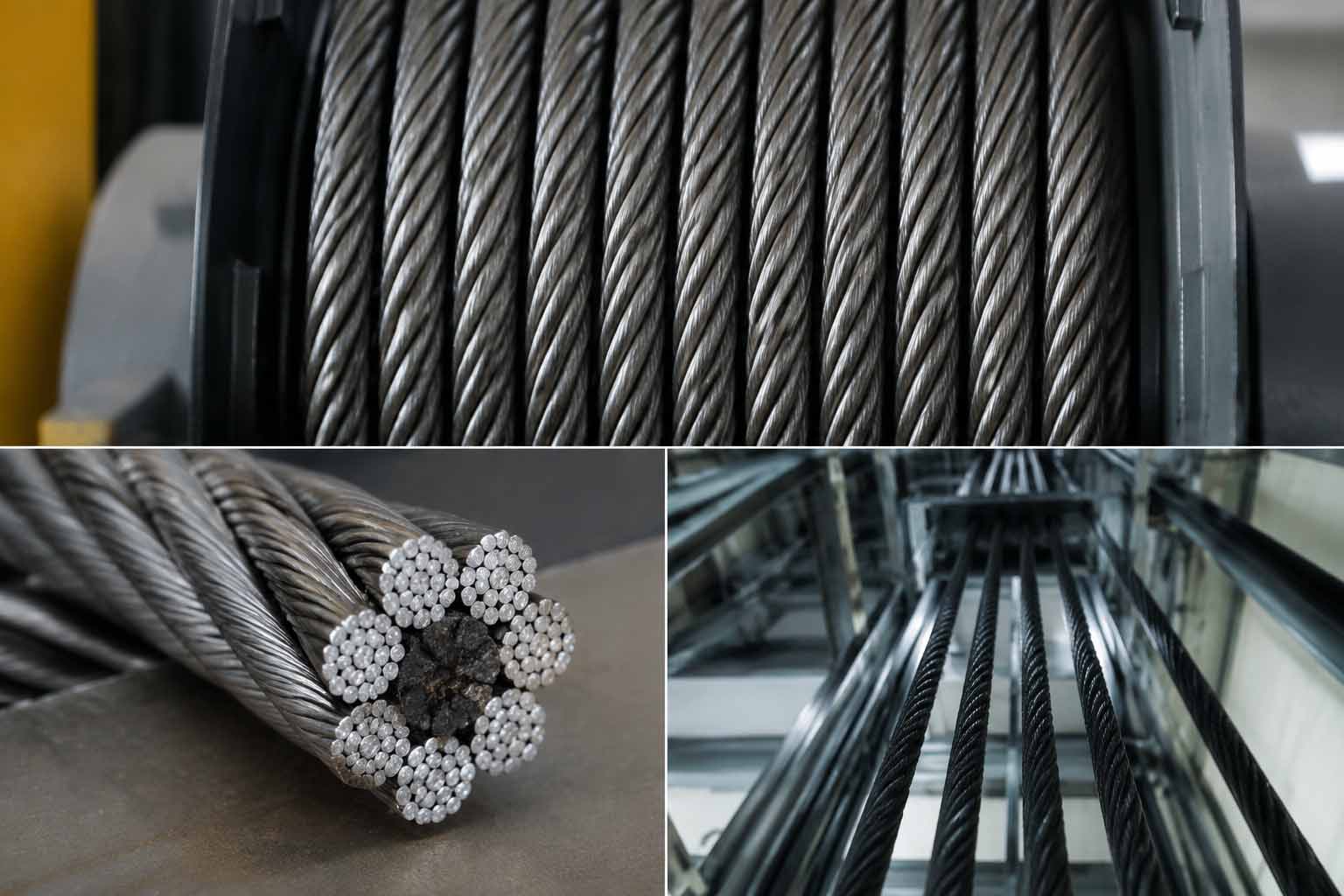
The solution to the lifting problem originated in the German mining industry. In 1834, a mining engineer named Wilhelm Albert invented the first stranded wire rope. Albert’s design consisted of individual metal wires twisted together to form a strand, with several strands then twisted helically around a central core.
This specific geometry introduced the concept of mechanical redundancy to lifting. If one individual wire broke due to friction or fatigue, the surrounding wires within the strand would continue to bear the load. This predictable wear pattern allowed engineers to visually identify fatigue and replace the rope before a complete structural failure occurred. Albert’s initial invention became the foundational blueprint for every steel wire rope for elevator applications used today.
The Passenger Elevator and Puddled Iron (1850s)
The transition from horizontal mining carts to vertical passenger lifts required better safety mechanisms. In 1852, Elisha Otis invented the elevator safety brake, which prevented the cabin from falling if the hoist rope broke. This invention made passenger elevators safe for public use.
During this era, the standard wire rope for elevator use was manufactured from puddled iron. While puddled iron was a massive improvement over hemp and chains, it possessed a relatively low tensile strength. As architects began designing taller buildings in cities like New York and Chicago, the weight of the long iron ropes themselves became a mechanical burden on the motor systems. The industry needed a stronger, lighter material.
The Shift to High-Carbon Steel (Late 19th Century)
The introduction of the Bessemer process and subsequent advancements in metallurgy allowed manufacturers to produce high-carbon steel efficiently. By the late 19th and early 20th centuries, the elevator steel rope replaced puddled iron completely.
Engineers developed the cold-drawing process for steel wire. By pulling steel rods through progressively smaller dies at room temperature, they aligned the metallic grain structure, massively increasing the tensile strength of the wire. This permitted the creation of a much stronger, yet thinner and more flexible, elevator steel wire rope. With these high-tensile elevator wire ropes, architects were finally freed from previous vertical limits, leading directly to the boom of 20th-century skyscraper construction.
Modern Manufacturing and Core Technologies (20th Century to Present)
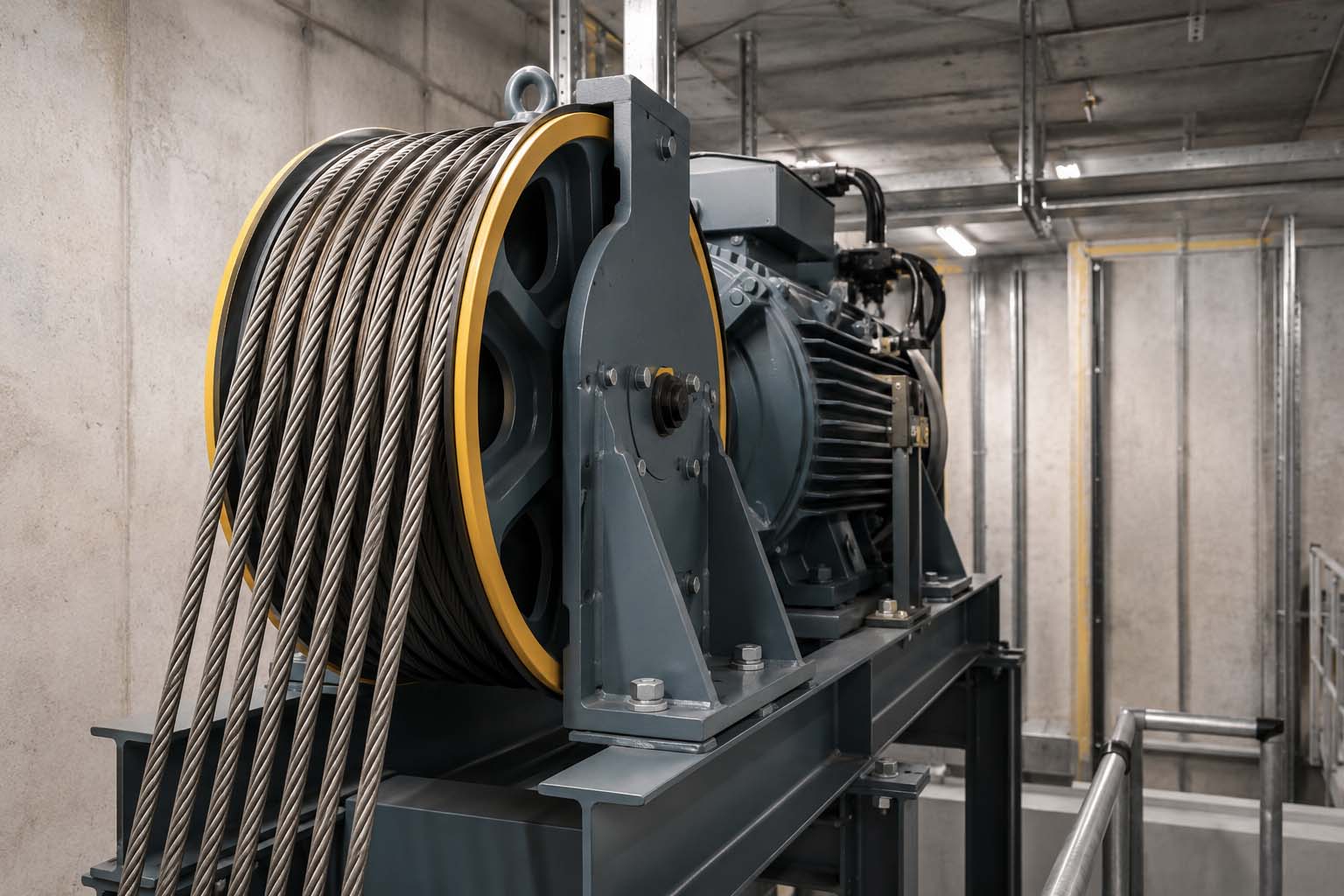
As building heights and elevator speeds continued to increase throughout the 20th century, the demands placed on a steel wire rope elevator system multiplied. Ropes had to endure extreme high-frequency bending fatigue over traction sheaves at high velocities.
To solve this, manufacturers refined the internal geometry of the ropes. They introduced specific strand constructions, such as Seale and Warrington, which mixed different wire diameters to balance abrasion resistance with flexibility. Furthermore, modern metallurgy introduced "dual-tensile" wire configurations. Today, a wire rope elevator system often utilizes ropes where the outer wires are slightly softer to prevent wearing down the cast-iron motor sheave, while the inner wires possess ultra-high tensile strength to bear the vertical load.
Additionally, core materials evolved. While natural sisal fiber cores remained standard for mid-rise applications due to their ability to store and release lubricant, the Independent Wire Rope Core (IWRC) was developed for extreme high-rise applications. An IWRC is a smaller steel rope placed inside the main rope, completely eliminating the structural stretch that occurs in ultra-long wire rope for elevators.
Conclusion
To conclude this look into a brief history of wire elevator ropes, it is clear that the development of vertical transportation is directly tied to metallurgical advancements. From Wilhelm Albert’s first iron mining cables to the highly engineered, cold-drawn steel assemblies used in modern megatall skyscrapers, continuous improvements in tensile strength and fatigue resistance have defined the industry. Today, elevator ropes are precision-manufactured components, subject to strict international safety codes, ensuring that billions of passengers travel safely every day.
Elevator Wire Rope: The Ultimate Guide to Selection, Safety, and Maintenance
Applications of Steel Wire Rope in Modern Elevators: An Elevator Wire Rope Guide
Related Article